



Inside Tax Incentives for the Creative Industries
“THERE is no such thing as a free lunch.”
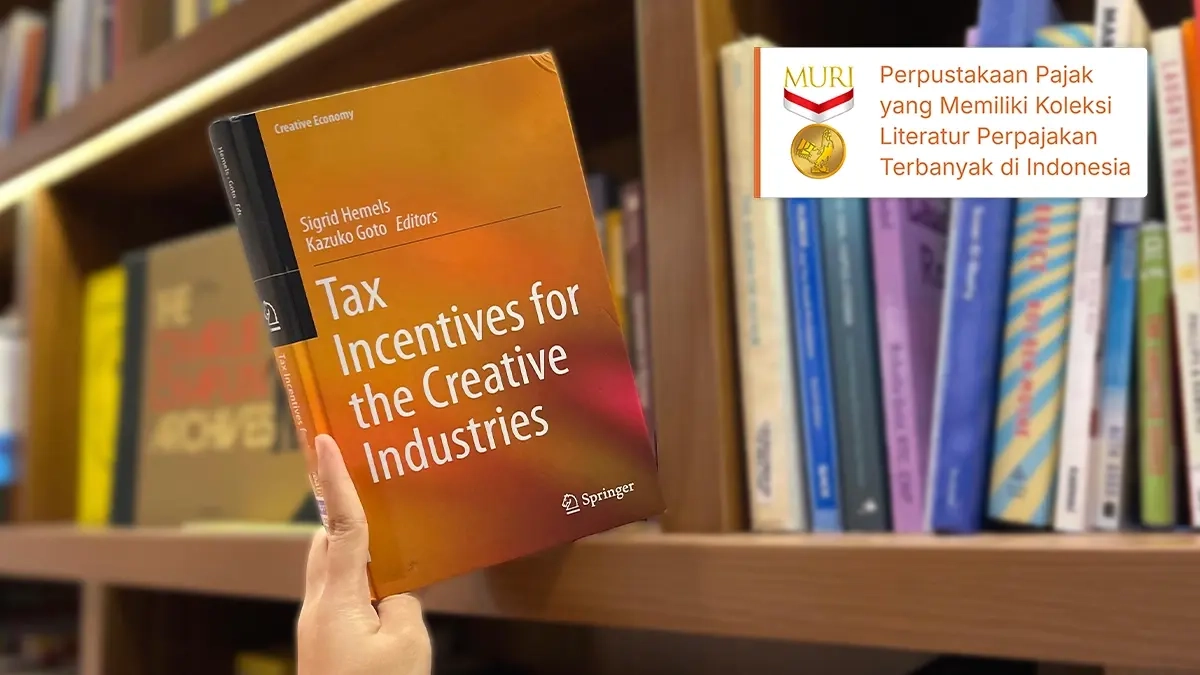
This legendary adage of economist Milton Friedman (1975) serves as the introduction to the book Tax Incentives for the Creative Industries—edited by Sigrid Hemels and Kazuko Goto—which examines the various issues surrounding tax incentives for the creative industries.
Every tax reduction enjoyed by arts practitioners or enthusiasts constitutes a tax expenditure. As a consequence, that expenditure must be offset through higher taxes in other sectors, reductions in public spending or increased borrowing.
In the book, readers are invited to explore the characteristics of the creative industries whilst also understanding why governments need to provide tax incentives for the sector.
According to Goto, the creative industries possess 3 hybrid characteristics that distinguish them from conventional manufacturing sectors. First, the creative industries have two dimensions: they carry a cultural policy mission whilst simultaneously serving as a target of economic policy.
Second, the creative industries represent a blend of art and commercial activity. Third, the creative industries ecosystem encompasses non-profit organisations and profit-oriented business entities operating side by side.
These three characteristics mean that free-market mechanisms are not always capable of allocating resources within the creative industries fairly and sustainably. This market failure can be explained through 4 problems that cast a shadow over the creative sector.
First, Baumol’s cost disease. This theory explains the difference in productivity growth between the creative and manufacturing sectors. Technological advances can increase manufacturing productivity, whereas productivity gains in certain creative activities tend to be more limited.
Second, an extreme cost structure. The creation of creative works, from scriptwriting and stage hire through to feature film production, may require substantial expenditure that cannot be recovered if the project fails (high fixed and sunk costs).
Conversely, if a masterpiece is created, the marginal cost of reproducing it can approach zero (zero marginal costs).
Third, positive externalities and the danger of free riders. Works of art and historical heritage provide social benefits that extend beyond commercial transactions. The free-rider phenomenon around cultural heritage sites, theatre performances and museums can cause owners or producers of art to bear the burden of costs without receiving all of the economic benefits generated.
Fourth, the dilemma of diversity versus the allure of the blockbuster. When faced with high fixed costs and uncertainty about public taste, commercial market players tend to favour works considered safer from a business perspective.
Arts producers are thus driven to fund only mass-market works that have proven popular. As a result, experimental works and local and independent art forms laden with philosophical value risk being marginalised.
It is here that Hemels, Goto, and the book's contributors see the importance of government intervention through tax incentives. Tax incentives or facilities take various forms, each with different implications for policy equity and effectiveness.
These forms include exemptions, allowances/deductions, tax credits, rate reductions and tax deferral.
However, notwithstanding their various shortcomings, Hemels underlines that tax incentives remain worth considering over direct subsidies, provided there is alignment between those who care about artistic activities and those who bear the cost of financing them.
Under the conventional direct subsidy system, the government, together with experts, determines which theatre studios or artists are entitled to receive grants, whilst the financing is borne by the public through taxation.
This top-down approach risks producing art that is enjoyed only by a small elite group and fails to reach the wider public. Conversely, through tax incentives on cultural donations, initiative can shift to the hands of the public, taking a bottom-up character.
When arts practitioners or enthusiasts donate to a local museum and the government lends its support through tax incentives, the relationship between artistic activities and the community can become stronger.
To examine this in practice more closely, the book invites readers to explore empirical case studies from various countries. Broadly speaking, fiscal policy for the creative industries falls into 2 main groups: the non-profit cultural heritage sector, which focuses on preserving public value, and the capital-intensive commercial sector, which competes for global investment.
Preserving Historical Heritage
Museums and institutions managing cultural heritage in various countries are among the oldest and most established recipients of tax incentives. Buijze examines how globalisation has given rise to cross-border arts philanthropy.
However, tax law in many countries remains oriented towards domestic interests, providing tax deduction facilities only for donations to local foundations.
To overcome this obstacle, the private sector has formed networks such as Transnational Giving Europe (TGE) and the King Baudouin Foundation United States (KBFUS) as well as establishing friends of organisations abroad.
Through these vehicles, art lovers in Spain or the United States (US) can donate to the Royal Concertgebouw Orchestra or the Mauritshuis Museum in the Netherlands whilst still enjoying tax deduction facilities in their home countries.
Another notable incentive is the scheme allowing tax to be paid using works of art and cultural heritage objects, such as acceptance in lieu in the United Kingdom or dation en paiement in France.
Rather than paying cash to settle an inheritance tax liability, heirs/heiresses are permitted to transfer rare paintings, historical manuscripts or ancient buildings to the state.
However, a different case arose in Japan. When the father of Empress Michiko passed away in 1999, the historic house in which the Empress was born was handed over to the state to settle the inheritance tax.
Because Japanese regulations required the asset to be auctioned to generate state revenue, the historic house was ultimately demolished and the land sold to a private developer.
The Battle of the Silver Screen to Video Games
The film and television sector is one of the most fiercely contested arenas for tax incentive competition between countries. In the US, incentive competition even takes place between individual states.
As many as 39 of the 50 states offer tax rebates ranging from 20% to 40% of total wage expenditure for local production crew. As a result, film studios have become accustomed to relocating their shooting locations in order to obtain the largest tax incentives.
One example occurred with the series House of Cards, which threatened to move its shooting location from Maryland if the state government did not extend and increase the allocation of production tax credits in 2014.
Meanwhile, Hungary has become one of the destinations for Hollywood film production thanks to a 25% rebate scheme, supplemented by an allowance of 20% of the budget that can be spent outside Hungary without forfeiting entitlement to the full incentive.
Films such as Die Hard 5, Munich and Inferno undertook their filming in Budapest. However, Hemels criticises the effect of this competition on working conditions.
She argues that, to become a low-cost film production destination, local Hungarian workers must work 12 hours a day, 6 days a week, without overtime allowances or protections according to European Union standards.
Further lessons can be drawn from the Dutch experience. During the period 1998–2007, the government introduced a partnership facility (commanditaire vennootschap) that allowed individual investors to depreciate film investments freely and deduct losses directly from taxable income.
The scheme was subsequently widely exploited as an investment means to reduce the tax burden for high-income groups. The government even temporarily raised the deduction to 130%, which was said to guarantee investors a return of 67.6%.
The bankruptcy of the film Soldaat van Oranje and the discovery that Dutch tax incentives were also being used to finance foreign films ultimately prompted the government to abolish the scheme and replace it with better-controlled direct subsidies.
Beyond this, technological developments have also driven the emergence of tax incentives for the video game industry.
When Canada launched incentives for digital labour costs, such as the Ontario Interactive Digital Media Tax Credit (OIDMTC) at 40%, the United Kingdom faced a large-scale exodus of creative workers to Canada.
During the period 2008–2010, employment in the video game industry in Canada increased by 33%, whilst in the United Kingdom it fell by 9%.
Confronted with this situation, the United Kingdom launched the Video Games Tax Relief (VGTR) in 2014, following France's lead. The policy was implemented after the United Kingdom successfully persuaded the European Commission that modern video games are cultural products with artistic value, rather than merely commercial entertainment commodities.
The Ironies of Tax Law, the Art Market and Copyright
In the final two chapters of the book, Hemels and Molenaar examine the market for buying and selling visual artworks, the management of copyright and the conditions of independent artists.
Customs law in the European Union defines works of art narrowly, encompassing hand-painted pictures, original sculptures, limited-edition art prints and hand-woven tapestries.
This definition triggered a legal dispute in 2010. The European Commission issued a regulation that did not recognise artist Bill Viola's video installation Hall of Whispers or Dan Flavin's neon light installation as works of art.
The relevant authorities deemed both works to be electronic devices or ordinary lighting fixtures subject to import duty. Yet, previously, a court in London had heard testimony from expert witnesses and art critics stating that the works were indeed works of art.
This case illustrates the challenges in aligning customs provisions with developments in contemporary art. The difference in classification may also distort competition in the art market.
On the other hand, the global art market has witnessed the development of free port facilities in Geneva, Luxembourg, Singapore, Beijing and Delaware. The various facilities on offer make these areas storage locations for high-value artworks under specific tax treatment arrangements.
In terms of copyright, Molenaar underlines that ownership of intellectual property rights is relatively easy to transfer between countries. This allows utilisation of low-tax jurisdictions and IP Box schemes. Such practices are one of the concerns addressed in Action 5 of the OECD/G20 Base Erosion and Profit Shifting (BEPS) Project.
However, at the individual level, the circumstances of independent creators are often concerning. Based on surveys cited in the book, the majority of pure artists live below the poverty line and must take on additional work to make ends meet.
To protect them, Ireland introduced an artists' tax exemption. Launched in 1969, this incentive exempts the income of authors, composers and sculptors from taxation.
A number of well-known international artists and musicians were even attracted to take up residence in the country. However, because the incentive was at one point exploited by athletes and politicians publishing memoirs, its provisions were restricted in 2015 to better target the intended beneficiaries.
In Mexico, painters, sculptors and graphic artists are permitted to submit their own works of art as a form of tax payment (pago en especie).
This arrangement has been in place since 1957, with the number of works submitted adjusted according to the volume of works sold in the current year. Thanks to this facility, the Mexican government holds one of the largest collections of contemporary visual art in the world, displayed across various public museums.
Lessons for Indonesia
In closing the book, Hemels and Goto warn of the dangers of a race to the bottom. Excessive reliance on incentives can also affect artistic freedom (creative demands).
One example can be seen in the production of the James Bond film Spectre. The producers or studio were willing to alter the screenplay, changing the villain's character so as not to be Mexican and to feature a Mexican actress as the Bond girl, to obtain tax incentives worth USD20 million from the Mexican government.
When tax incentives begin to influence storylines and freedom of expression, the boundary between cultural diplomacy interests and compromise of artistic integrity becomes ever thinner.
For Indonesia, which is currently promoting the creative industries and creative economy as one of the cornerstones of future economic growth, this book offers several lessons.
First, avoid the assumption that tax incentives are cost-free facilities. The government must not regard tax incentives as instruments that can be granted without fiscal consequences.
Every rupiah of tax revenue foregone needs to be recorded transparently and evaluated periodically, preventing incentives from becoming loopholes for tax avoidance by large businesses.
Second, design equitable tax credit-based incentives. Rather than relying solely on supertax deduction facilities that benefit larger companies more, the government could consider tax credit schemes that are more accessible to creative industry players operating at start-up and small and medium enterprise (SME) scale.
Third, promote arts philanthropy that engages the public. To reduce local artists' dependence on limited ministerial grant budgets, the scheme for tax deductions on cultural donations needs to be simplified and widely promoted.
By connecting arts practitioners and enthusiasts with creative communities in the regions, Indonesia's arts ecosystem is expected to grow more independently, to be more deeply rooted in society and to be less susceptible to shifts in government policy.
Interested in reading this book? Please visit the DDTC Library.
To date, the DDTC Library holds 5,096 items of literature supporting the study of taxation as a multidisciplinary field. The DDTC Library has also been recognised by the MURI Record as the Tax Library with the Largest Collection in Indonesia.
Before visiting the DDTC Library, visitors may wish to confirm their visit in advance via the hotline +62-21-2938-2700 or email address [email protected]. Visit the DDTC Library's Instagram page for the latest information on tax literature. (rig)