



Singapore Tax Academy CEO: AI Cannot Replace Tax Trainers
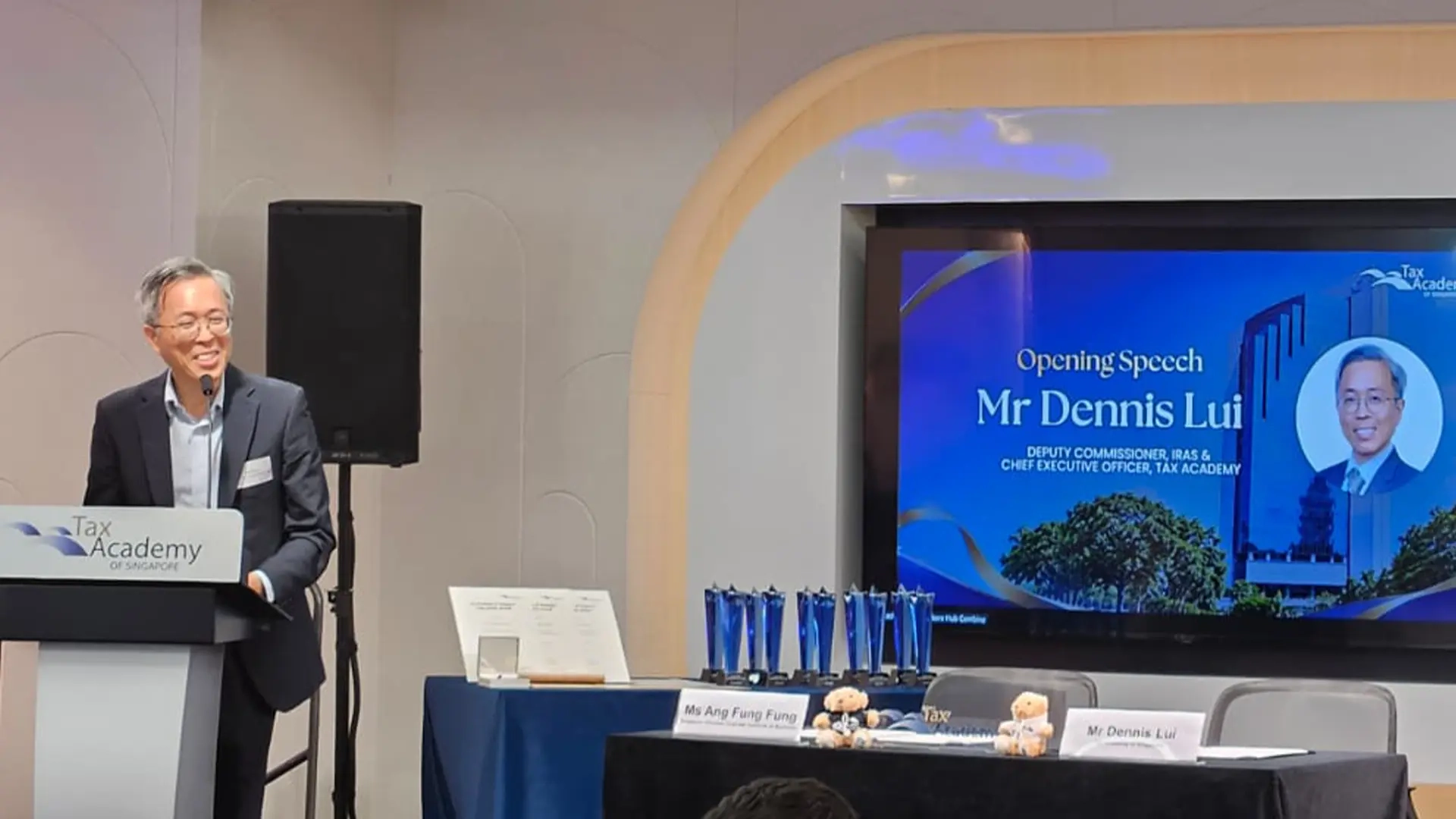
SINGAPORE, DDTCNews - Tax Academy of Singapore CEO, Dennis Lui, believes that the development of artificial intelligence (AI) will not fully replace the role of educators or trainers in tax education. This is because the practical experience, case discussions and exchange of perspectives provided by trainers play a vital role in shaping participants' analytical ability and professional judgement.
Lui noted that AI can indeed assist tax professionals in researching tax provisions, analysing transactions and formulating recommendations. However, the ability to obtain answers quickly does not necessarily mean that a person understands the issue at hand.
"Knowing the answer is not the same as understanding why it is right, recognising when it may be wrong, or exercising judgment when the answer is unclear," he said in a speech at the Tax Academy Appreciation Event 2026 in Singapore, Friday (13/11/2026).
Lui explained that the development of AI makes it increasingly easy for tax professionals to obtain answers that appear convincing. This situation may potentially create an illusion of understanding, namely a situation in which a person feels they have understood an issue simply because they have received a plausible answer.
He raised the concept of cognitive friction previously put forward by Singapore Chief Justice Sundaresh Menon. This concept emphasises the importance of building an independent thinking process before a person views recommendations generated by AI. In the context of tax professionals, practitioners need to form their own initial analysis before using AI as a tool.
He acknowledged that technology can save time and effort. Nevertheless, some of the processes that technology eliminates are precisely those that are important for building professional tax judgement.
Therefore, tax professionals must still be able to explain the reasoning behind a conclusion, recognise the possibility of error, and make decisions when an issue does not have a definitive answer.
"Deep technical knowledge remains essential. But increasingly, professionals must also be able to apply that knowledge with sound judgment, understand commercial realities, appreciate policy considerations and connect insights across disciplines and jurisdictions," he explained.
Such capabilities cannot be developed simply by absorbing more information. Tax professionals need to gain experience, be exposed to diverse perspectives and opportunities to resolve difficual issues. This is where the role of trainers becomes important in tax education.
Lui noted that the Tax Academy of Singapore draws on practitioners from Singapore's tax authority (Inland Revenue Authority of Singapore/IRAS), professional firms, businesses, universities and institutions in Singapore and overseas. These trainers bring practical experience, complex cases and fresh perspectives to the learning process.
He added that trainers also play a role in challenging participants to question assumptions, consider different interpretations and develop their own professional judgement. This type of learning process represents added value that no textbook or AI system can fully replace.
The practical experience of these trainers is also reflected in the Tax Academy of Singapore's collaboration with IPOS International in October 2026. The two institutions held a three-day programme linking aspects of intellectual property, valuation and taxation. See: DDTC Dispatches Professionals to Singapore for IP Rights & Tax
Lui explained that businesses need to consider all three aspects simultaneously, although they have traditionally been taught separately. Through this cross-disciplinary approach, the Tax Academy of Singapore aims to promote learning that not only deepens expertise within each field but also enhances understanding of the interconnections between disciplines.
In line with the changing needs of the profession, the Tax Academy of Singapore will also expand its educational approach through three dimensions of competence: know-what, know-how and know-who. Know-what relates to maintaining deep and up-to-date technical knowledge. Meanwhile, know-how refers to the ability to apply knowledge to resolve difficult, real-world problems with professional judgement.
Know-who relates to the ability to build networks and identify the right parties to collaborate with when facing cross-disciplinary issues.
Beyond tax specialists, tax education also needs to reach the business community. According to Lui, business owners, directors, finance and human resources (HR) leaders also need to understand tax issues, as the business decisions they make frequently have tax consequences.
At a minimum, they need to be able to identify tax issues, ask better questions and know when to seek professional advice. This approach is expected to improve tax literacy among businesses, including micro, small and medium enterprises (MSMEs).
Further, the development of tax professionals' competence also forms part of the transformation of Singapore's tax authority, the Inland Revenue Authority of Singapore (IRAS), through the One IRAS 2035 agenda. This agenda encompasses efforts to build a tax administration that is more pro-business, strengthen revenue resilience, harness the potential of AI and build a stronger, future-ready workforce.
Lui affirmed that the ambition of the Tax Academy of Singapore going forward is not limited to imparting tax knowledge. The institution also aims to build the expertise, professional judgement and networks that IRAS, the tax profession and Singapore's business community will need to meet future challenges.
The Tax Academy Appreciation Event 2026 was also attended by DDTC Co-Founder Danny Septriadi. The event served as an appreciation occasion for trainers, institutional partners and those who have contributed to the development of the Tax Academy of Singapore over 20 years.
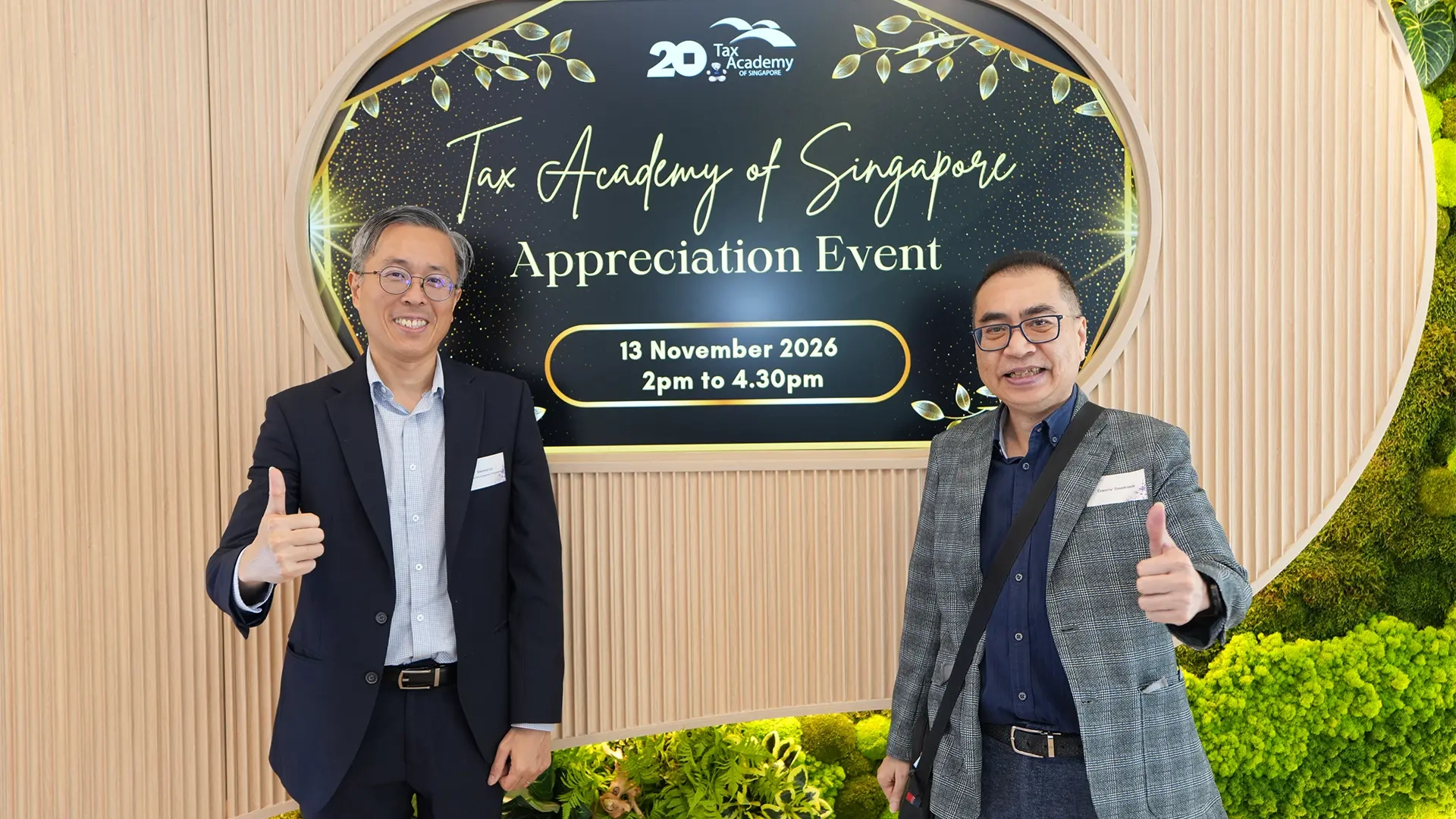 Tax Academy of Singapore CEO Dennis Lui and DDTC Co-Founder Danny Septriadi.
Danny agreed with Lui's statement that the experience and perspectives shared by trainers remain of paramount importance in tax education. In his view, AI can be utilised as a tool to enrich the learning process, accelerate the retrieval of information, and broaden understanding.
"The practical experience, analytical ability and professional judgement of a trainer cannot be fully replaced by AI. For this reason, a combination of human experience and the use of technology will make the learning process more comprehensive," said Danny.
The topic of AI application in tax administration had previously been raised by Lui when he served as a speaker in a public lecture at the Faculty of Administrative Science, University of Indonesia (FIA UI). On that occasion, he affirmed that professional judgement, empathy, human touch and accountability remain key aspects that cannot be fully replaced by technology. See Tax Academy of Singapore: AI Is Only a Tool, Not a Human Replacement (dik)