



Global Practice of Party Bearing the Transfer Pricing Burden of Proof
JAKARTA, DDTCNews - The burden of proof in transfer pricing determines which party must demonstrate the arm's length nature of a controlled transaction's price when an audit or tax dispute arises, whether the taxpayer or the tax authority.
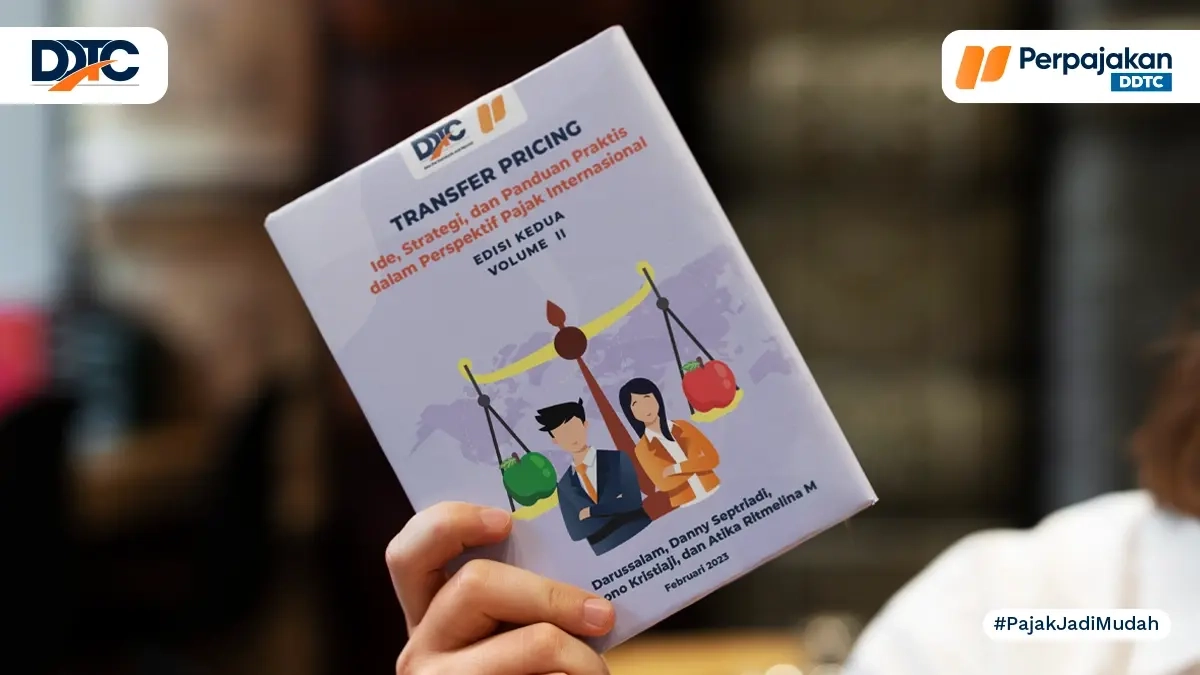
The rules differ in every country. These differences can even influence the direction in which a dispute is resolved. This topic is discussed in Chapter 24 of the book Transfer Pricing: Ide, Strategi, dan Panduan Praktis dalam Perspektif Pajak Internasional (Edisi Kedua - Vol 2).
Based on observations across various countries, the OECD notes that tax rules in many jurisdictions place the tax authority as the party bearing the burden of proof. That burden may shift to the taxpayer if the taxpayer does not act in good faith.
For example, the taxpayer fails to comply with controlled transaction documentation obligations, is uncooperative with reasonable document requests or submits a false or misleading tax return. In such circumstances, the tax authority may estimate taxable income.
Regardless of the party bearing the burden of proof, the OECD affirms that both taxpayers and tax authorities must demonstrate good faith in showing that the transfer pricing is consistent with the arm's length principle (ALP).
Good faith is also required of tax authorities. According to the OECD, tax authorities are generally not free to issue assessments that are legally unfounded. Setting taxable income as a fixed percentage of turnover whilst disregarding the ALP is an example of conduct inconsistent with good faith.
The allocation of the burden of proof in transfer pricing varies considerably. In the United States, the taxpayer bears the heavier burden. To shift it to the tax authority, the taxpayer must demonstrate that the IRS adjustment was made improperly, inconsistently and without justification.
This approach also applies in Canada, Australia, India, Brazil and South Africa. In Australia, that obligation attaches at every level of the dispute process.
The Netherlands, however, takes the opposite approach. The burden of proof initially lies with the tax authority, but shifts to the taxpayer if the controlled transaction documentation does not contain sufficient information.
In the United Kingdom, the burden of proof is initially placed on the taxpayer. However, it may shift to the tax authority if the controlled transaction has been conducted on arm's length terms and is supported by adequate documentation.
Austria, by contrast, applies a different approach by placing the burden of proof on the party making the claim. The taxpayer must prove claims for income deductions, whilst the tax authority must prove claims for profit increases.
There are also countries that formally place the burden on the tax authority yet still require an active role from the taxpayer. Japan and Israel fall into this group. In Japan, the taxpayer is required to provide transfer pricing documentation.
In Israel, that documentation even extends to documentation from affiliated parties overseas. Spain, which places the burden on the taxpayer, also requires the provision of transfer pricing documentation.
Across these various practices, documentation is a critical factor in transfer pricing proof. In the Netherlands and the United Kingdom, the quality of documentation can influence the shift in the burden of proof. Meanwhile, Japan and Israel continue to require taxpayers to provide documentation.
What is the practice in Indonesia? And how should documentation be prepared to strengthen a taxpayer's position in a dispute? The full answers are contained in this book.
This book comprises 14 chapters and 550 pages. Its scope covers transfer pricing for special transactions, corporate strategy, procedural and legal aspects, including the burden of proof, tax audits, objections and appeals, MAP and APAs as well as contemporary developments.
This book is penned by Darussalam, Danny Septriadi, B. Bawono Kristiaji and Atika Ritmelina Marhani. This reference is valuable for the business community, tax authorities, the tax court, tax consultants and academics.
Interested in adding a transfer pricing reference to your bookshelf? Two packages are available, each containing this book and one additional tax regulation reference. Volume II may also be purchased separately.
The packages can be ordered via store.perpajakan.ddtc.co.id with free delivery. Have a question about this book? Contact the DDTC Tax Hotline on WhatsApp at 0813-8080-4136 (Siska). (rig)