



When AI Erodes the Labour Tax Base
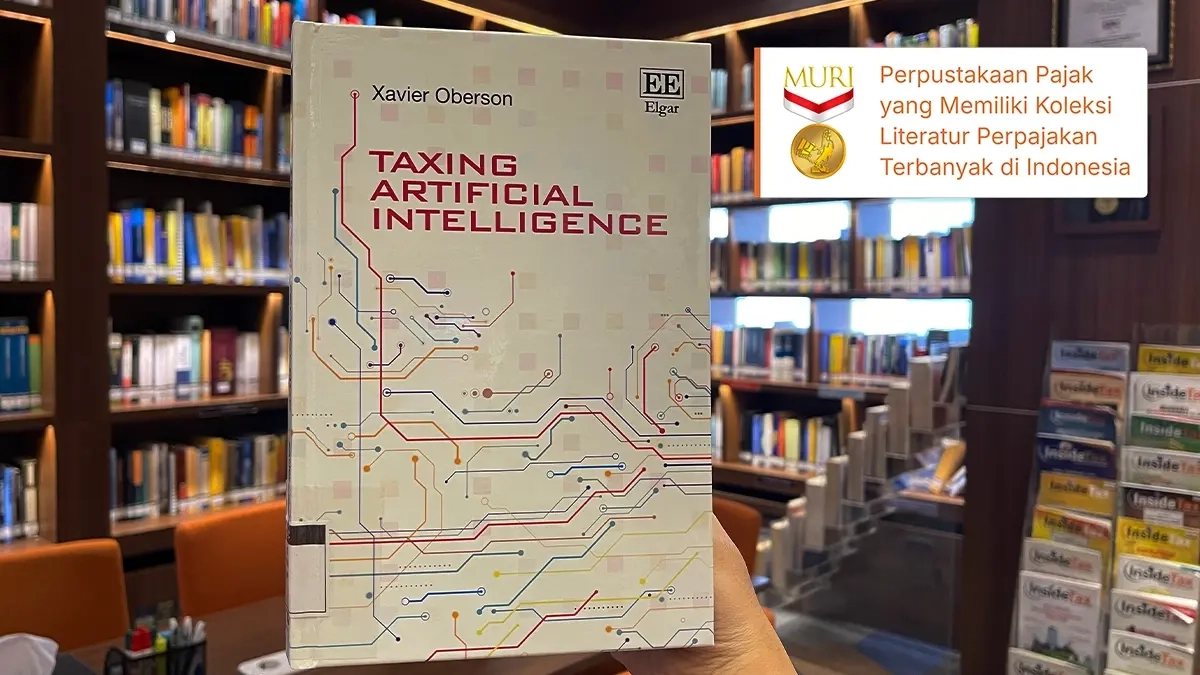
THE EXPANDING use of artificial intelligence (AI) technology, large language models (LLMs) and advanced robotics within global production chains has shifted the automation debate from managerial efficiency into a fiscal-democracy crisis.
In modern states, fiscal revenue is heavily dependent on the taxation of human labour as a factor of production. Consequently, the substitution of labour by intelligent algorithms has the potential to erode tax revenues.
The erosion of the tax base caused by AI disruption occurs through a decline in income tax and social security contributions.
As industrial workers, administrative staff and highly skilled professionals are replaced by AI, the stream of individual income tax revenues risks falling significantly.
Through the book entitled Taxing Artificial Intelligence, published in 2024, Xavier Oberson raises a critical question: Why does the surge in AI-driven corporate productivity not automatically offset the fiscal deficit through corporate income tax or capital gains tax?
Departing from this structural issue, Oberson advances the thesis that taxing AI is no longer merely a futuristic idea, but rather an economic-legal necessity.
According to Oberson, taxing AI can serve as one instrument for maintaining the sustainability of state revenue and supporting the principle of fiscal fairness amidst technological development.
This book is a development of Oberson's earlier thinking set out in Taxing Robots: Helping the Economy to Adapt to the Use of AI, published in 2019.
Oberson substantially expands the scope of his analysis from purely physical robotics to the more complex algorithmic landscape.
This development reflects an effort to align the international tax law approach with the shift in economic value creation, from the use of physical robots towards intangible artificial intelligence systems.
Oberson also revisits conventional tax law approaches that rely heavily on physical presence and tax subjects as entities. In his view, restricting taxation solely to physically tangible robots constitutes a fundamental error.
In line with this, Oberson undertakes a theoretical reconstruction of the ability-to-pay principle towards recognition of an electronic ability to pay or capacité contributive électronique.
Further, Oberson recommends an AI taxation policy framework through a two-stage approach.
First, the tax on the use of AI phase. This phase represents a short-to-medium-term transition focused on levying tax at the level of business entities that utilise AI for operational efficiency.
Second, the tax on AI per se phase. This phase represents a long-term projection for highly autonomous AI systems, through the recognition of a new taxable entity or tax subject, known as the AI taxable unit (AITU).
The implementation of an AI tax on a global scale will interact directly with the architecture of international tax governance currently undergoing reform, in particular under the OECD/G20 Inclusive Framework on BEPS.
In the closing section of this book, Oberson affirms that an AI tax will give rise to challenges for the application of tax treaties and GloBE Rules as well as value added tax (VAT). The synchronisation of international tax rules and the allocation of tax revenues is a manifestation of fiscal fairness in the digital age.
This book presents a theoretical framework and analysis that is of critical importance, offering a legal-economic roadmap for academics, authorities and tax policymakers in responding to increasingly autonomous technological disruption.
Interested in reading this book? Please visit DDTC Library.
To date, DDTC Library holds a total of 5,053 literature collections supporting the study of taxation as a multidisciplinary field and has received the MURI record as the Tax Library with the Largest Collection in Indonesia on 10 July 2026.
Before visiting DDTC Library, members of the public may first confirm via the hotline: +62-21-2938-2700 or email: [email protected]. You are also welcome to visit DDTC Library's Instagram for the latest information on tax literature. (rig)