



Taxes through the Ages: Tracing the Long History of Taxation
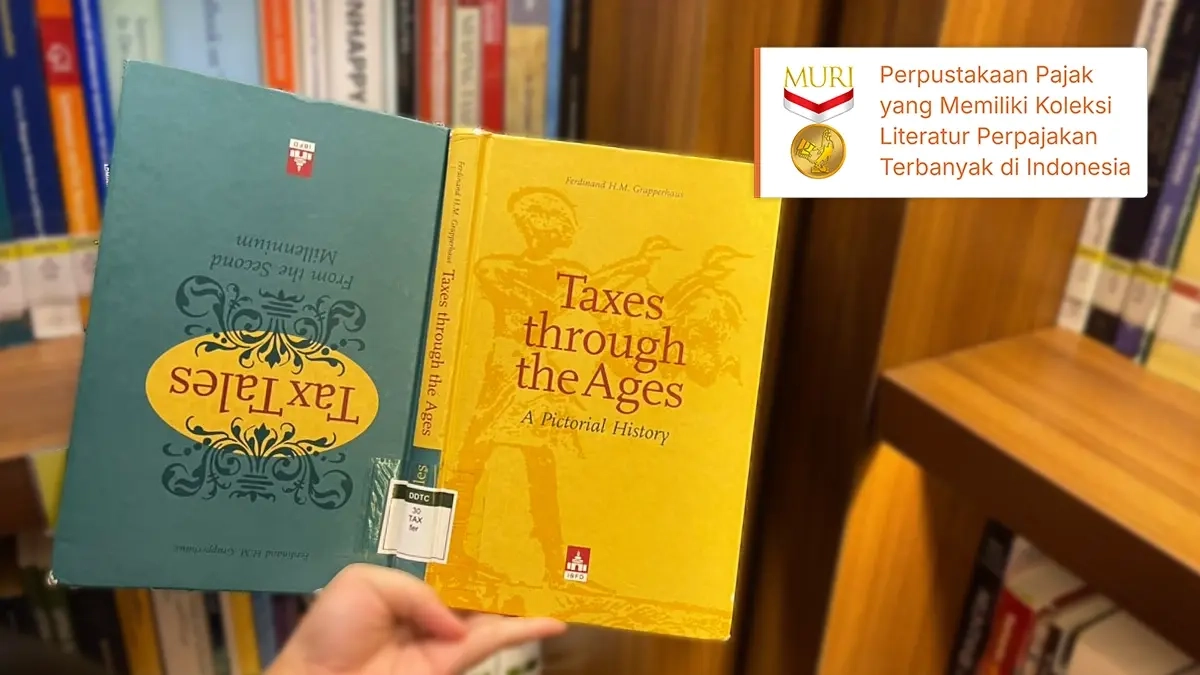
TO understand contemporary tax issues, Ferdinand H.M. Grapperhaus invites readers to first look back at the long journey of taxation through the ages. Notably, that journey is packaged in a book with two titles on two opposing sides.
On one side, readers will find Taxes through the Ages: A Pictorial History. When the book is flipped over, there is Tax Tales: From the Second Millennium. The content is likewise divided between both titles, thus, this IBFD publication effectively presents 2 books in 1 volume.
In both sections, Grapperhaus dissects the history of taxation using a methodology that combines empirical historical fact reconstruction, normative legal analysis and visual exploration. The central thesis advanced by Grapperhaus centres on an essential definition of taxation:
“An individual sacrifice for the sake of a collective purpose.”
Through this lens, Grapperhaus examines the lengthy metamorphosis of tax collection. He recounts how taxation, born heavily laden with coercion, seizure and plunder, ultimately grew and developed into a legitimised levy overseen by civilisation.
The book also identifies and analyses 3 principal scenarios that gave rise to tax collection systems in the early era of civilisation, namely protection, seizure and plunder or assistance.
Beginning with the era of the Sumerian Municipal-State, with its forms of forced labour and poll tax that subsequently shifted to a harvest profit-sharing system in the agrarian sector, through the development of agrarian societies in Egypt and ancient Rome that drove the emergence of land registration systems, to its apex under the Roman Emperor Diocletian, who reformed the structure of direct taxation through asset assessment (capitatio-iugatio).
The second millennium became a crucial arena in the history of taxation, triggering clashes of power, giving rise to constitutional limitations, igniting major revolutions and redefining the boundaries of modern state sovereignty.
Grapperhaus recounts the fiscal dynamics of the second millennium through 3 civilisational journeys. First, taxation as a dialectical relationship between sovereignty and democracy in Europe from the 10th to the 20th centuries.
Second, taxation as a catalyst for revolution and national unity in the United States from 1765 to 1801. Third, taxation under the Mughal Empire in India from 1526 to 1709, which illustrates how a modern administrative system can deteriorate as a result of religiously based fiscal discrimination.
In essence, the lessons drawn from the fiscal clashes of the second millennium offer valuable implications for policymakers in reforming tax administration in the era ahead.
Through this book, Grapperhaus teaches one fundamental lesson: understanding the history of taxation will guide us in designing a fair, rational, and transparent tax system so that a civilisation may endure and flourish.
Interested in reading this book? Please visit DDTC Library.
To date, DDTC Library holds a total of 5,053 literature collections supporting the study of taxation as a multidisciplinary field and has achieved a MURI record as the Tax Library with the Largest Collection in Indonesia on 10 July 2026.
Before visiting DDTC Library, members of the public may first confirm their visit via hotline: +62-21-2938-2700 or email: [email protected]. Visit DDTC Library's Instagram as well for the latest information relating to tax literature. (rig)