



Exploring the Tax Culture of a Nation
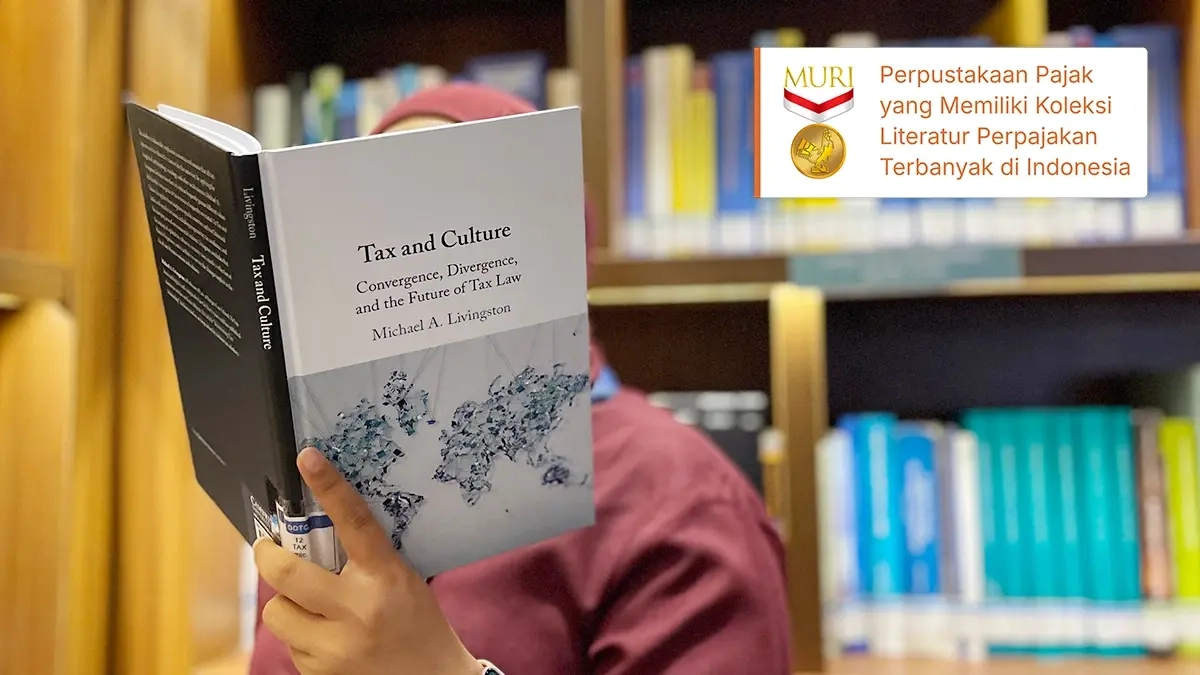
“Taxation is among the most politically contested, emotional areas of law: entire countries have been born in tax revolts, and some are in danger of dying from them.”
Michael A. Livingston, in his book Tax and Culture: Convergence, Divergence, and the Future of Tax Law, argues that taxation is essentially a mirror of the soul, history, fears and social agreements of a society.
In conventional comparative law scholarship, academics and tax experts have often relied on the doctrine of praesumptio similitudinis. This doctrine proceeds from the assumption that, in an era of free markets and digitalisation, tax systems across the globe will converge towards a standard international format (global convergence).
Published in 2020, this book challenges that assumption by identifying three weaknesses in the view that tax systems should be standardised.
First, universal standards carry geopolitical bias. Tax policies regarded as best practice and neutral have long been promoted by multilateral organisations and international donor institutions. In reality, however, such policies merely reflect the legal traditions or interests of Anglo-American or North-Western European nations.
Second, uniformity on paper but a chasm in practice. Many countries have adopted income tax, value added tax and progressive tax rates. Yet the way authorities audit taxpayers, the way courts adjudicate tax disputes and the way citizens perceive their tax obligations differ enormously.
Finally, the failure of legal transplants. Importing anti-tax-avoidance provisions or income tax return formats from abroad without understanding local social conditions frequently produces layers of administrative formality without any voluntary compliance.
Livingston asserts that the divergence of tax systems between countries is not a 'temporary defect' that will be swept away by globalisation, but rather a permanent reflection of legitimate, deep-rooted, and deserving cultural differences (national divergence).
In his view, tax culture is a coherent structure supported by three mutually influencing pillars: the anthropology of taxation, the sociology of taxation and historical embeddedness.
In the anthropology of taxation, Livingston examines how citizens feel when they pay taxes. Do they regard taxation as a collective contribution for the public good? Or do they see it as a unilateral seizure by a potentially corrupt state?
The next pillar is the sociology of taxation. Livingston demonstrates how the tax culture that takes shape determines the mindset of academics and practitioners within a country.
For example, law students in the United States are taught to resolve disputes starting from judicial decisions (facts-to-law), whereas in Italy, students begin their studies from abstract principles of taxable capacity and scholarly doctrine (law-to-facts).
Tax culture is also reflected in the rule-making process. Is tax policy decided through technocratic deliberation behind closed doors? Or does it play out on an open stage in congress, parliament and public courts?
According to Livingston, tax institutions are inherently sticky and resistant to change, deeply shaped by history. Many rules have emerged not from pure economic theory but from emergency wartime compromises or the legacy of colonial administration.
To explore these three pillars of tax culture, Livingston invites readers to observe their practice across different parts of the world.
In the United States, a profound attachment to individual liberty gives rise to a natural suspicion of government power.
Tax disputes in the United States frequently become highly formal, rigid legal battlegrounds, laden with detailed technical rules in the tax court. Taxpayers demand absolute certainty in black and white.
In Italy, by contrast, the relationship between taxpayers and the tax authority more closely resembles a social drama and relational negotiation.
Written tax rules are often regarded as complex and unrealistic, so tax avoidance is not viewed as a grave moral wrong but rather as a commonplace art of survival.
Scandinavian countries, such as Sweden and Denmark, are frequently praised for successfully collecting high taxes without provoking public protest. In Norway, the tax data of the entire population is even published openly on the internet.
This success rests on a very particular cultural foundation. Replicating it in a country that is deficient in social stated capital and riddled with budgetary leakages is a certain recipe for mass rejection.
Livingston further recounts the rise of Asia, which has undermined the hegemony of European and American concepts of taxation.
In China, tax disputes do not centre on the protection of individual rights but on the achievement of national stability and social harmony.
Tax disputes are very rarely brought before open judicial courts and are largely resolved behind closed doors through mediation and administrative discretion.
In India, the tax system blends a British legal heritage with traditional social customs. One example is the legal recognition of the Hindu Undivided Family (HUF) entity, whereby an extended family is treated as a distinct tax subject.
Three Modern Tax Instruments
To substantiate his thesis, Livingston tests three modern tax instruments that are widely used globally. First, progressive tax rates.
In post-communist countries in Eastern Europe, the idea of wealth redistribution and progressive taxation once provoked a psychological backlash because it reminded citizens of oppression under the former regime, thereby driving the adoption of flat rates.
In the United States, where citizens are highly individualistic, progressive rates have nonetheless survived, shielded by the complexity of parliamentary institutions.
Second, general anti-avoidance rules (GAAR). GAAR clauses have now been adopted by many countries, but their application depends heavily on the ethos of the judges concerned.
In jurisdictions that uphold strict legalism, judges are reluctant to interpret taxpayers' motives and reject flexible anti-avoidance provisions. Conversely, in countries with a progressive judicial tradition, judges have no hesitation in setting aside formal rules in order to uphold fairness.
Third, environmental taxes. Environmental taxes grounded in the polluter-pays principle flourish in regions with high ecological awareness and trust in government green initiatives.
Meanwhile, in developing countries, where communities are still grappling with purchasing power and energy subsidies, environmental taxes risk being perceived as an additional burden strangling the economy of ordinary people, unless they are introduced with transparent public communication.
In conclusion, Livingston submits that the future of international tax law is not rigid standardisation but rather a dialogue between nations with diverse historical and cultural backgrounds.
Livingston's book reminds readers to accept the reality that there is no single tax formula that can be imposed upon the entire world. Ultimately, taxation is a story about people, the social contract, and the way a nation sustains its civilisation.
Interested in reading this book? Please visit the DDTC Library.
To date, the DDTC Library holds a total of 5,088 literature items supporting the study of taxation as a multidisciplinary field and has received a MURI record as the Tax Library with the Largest Collection in Indonesia.
Before visiting the DDTC Library, members of the public are welcome to confirm their visit by telephone at +62-21-2938-2700 or by e-mail at [email protected]. Please also visit the DDTC Library's Instagram account for the latest information on tax literature. (rig)