



Benefit Test and Shareholder Activities in Intra-Group Services
SINGAPORE, DDTCNews - Transfer pricing analysis of intra-group services is not solely concerned with determining the arm's length level of fees or markup.
Before determining the price of services, there are a number of steps to consider, ranging from confirming the services provided and identifying the benefits received, to determining whether the charges imposed satisfy the arm's length principle (ALP).
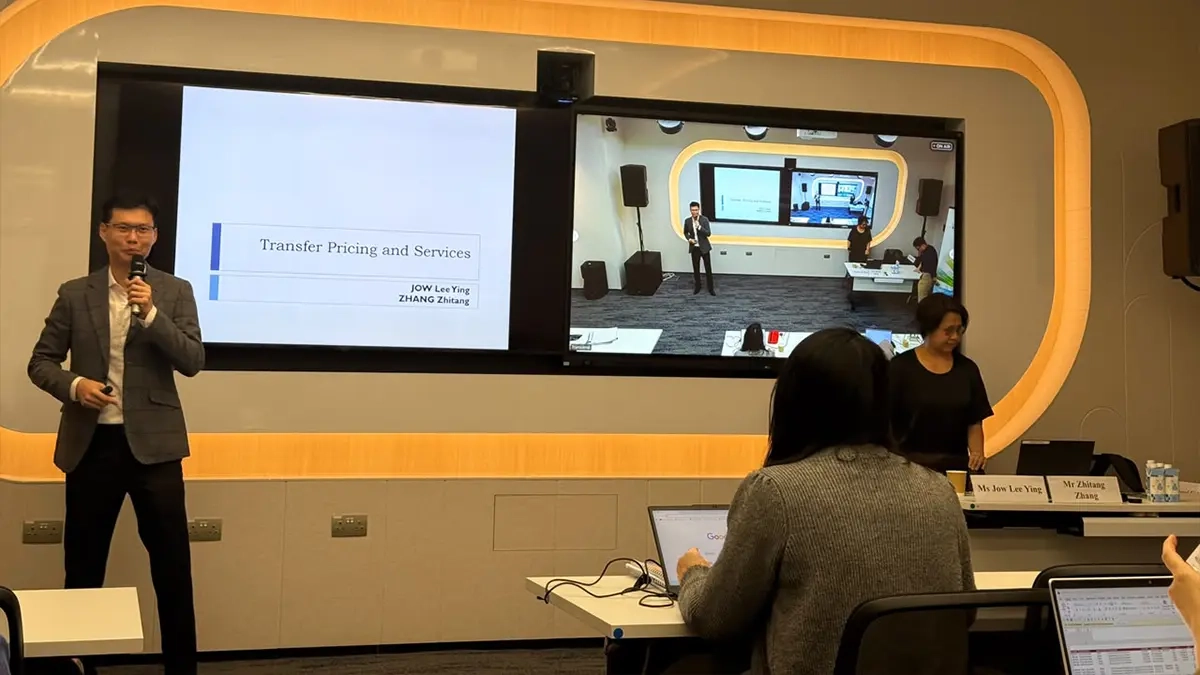
This formed part of the discussion in the Transfer Pricing and Services session at the WU-TA Advanced Transfer Pricing Programme 2026 in Singapore on Tuesday (30/9/2026).
The session was delivered by Senior Lecturer at Nanyang Technological University (NTU) Jow Lee Ying, who also serves as Transfer Pricing Director at EY Singapore and International Tax Senior Manager at FrieslandCampina, Zhang Zhitang. Both discussed intra-group services analysis from the perspectives of the OECD and Singapore.
Jow explained that intra-group services have a broad scope. Such services are not only provided by a parent company to its subsidiaries, but may also originate from a shared service centre, subsidiary entities or other entities within the group.
According to him, intra-group services can encompass a wide range of functions, including administration, technical, financial, commercial, management, coordination and group control.
“The scope of services that a group can provide to parties with a special relationship is very broad,” he said.
Within a multinational group, the shared service centre is one of the most commonly encountered models. Under this model, a particular entity may perform the role of service provider for other entities within the group, meaning the service provider is not necessarily the head office.
The Benefit Test as an Initial Step
According to Jow, once the scope of the intra-group service transaction has been determined, the next step is to confirm whether the service was actually rendered and whether it conferred a benefit on the receiving party.
He simplified the analytical framework for intra-group services into 2 core questions. First, whether an intra-group service was indeed provided. Second, what level of remuneration satisfies the ALP.
“Before determining the quantum, you must first establish whether a benefit was conferred,” he said.
Jow explained that the benefit test is important because the amount of the charge can only be determined once it has been concluded that the service recipient actually derived a benefit from the activities performed.
In addition, the benefit test can be assessed from several angles. One of these is whether the activity performed could reasonably be expected to provide a benefit to the recipient.
According to him, the word “reasonably” is significant in conducting this analysis, because the expected benefits need not necessarily materialise in the end.
For example, a parent company may provide marketing services to a subsidiary with the aim of increasing sales. However, if sales do not in fact increase following a marketing campaign, this does not in itself mean that the service was not provided or that no benefit was conferred.
“The benefit may not have materialised. However, because it was reasonably expected to materialise from the outset, the service can be regarded as having been provided,” Jow explained.
A further aspect to consider is whether the service recipient had a genuine commercial or practical need for the service.
According to Jow, this analysis relates to the question of whether independent parties in the same circumstances would be willing to pay for the service. However, the analysis must also take into account the actual circumstances of the service recipient.
“Is there a commercial or practical need for the service recipient to obtain those services?” he said.
Jow offered an illustration regarding marketing services. If an entity already has its own marketing strategy and has achieved its targets without group support, it is worth questioning whether additional marketing services from another group company are genuinely necessary.
Accordingly, the circumstances of the service recipient form an important part of determining whether an activity truly constitutes a service that confers a benefit.
Distinguishing Shareholder Activities from Stewardship Activities
The discussion then turned to shareholder activities. Jow explained that activities carried out in the interests of shareholders must be distinguished from activities that confer a benefit on group members.
“Shareholder activities are activities carried out in the interests of shareholders,” he said.
For example, activities related to providing information to shareholders, investor relations and reporting corporate performance to shareholders may be categorised as shareholder activities.
Jow distinguished these from stewardship activities, which are activities carried out to direct or control the business, for instance, when group management sets business strategy, drives profitability improvement or seeks to grow the group's market share.
“So, if a CEO wishes to drive a particular strategy for the business, that activity constitutes stewardship,” he said.
This distinction is important because not every cost incurred by the parent company in performing a particular function can be charged to its subsidiaries. The analysis must consider which party actually derives the benefit from the activity.
Jow also addressed the issue of duplicate activities. In practice, tax authorities may challenge service charges where the recipient entity already has a similar internal function.
He gave the illustration of a subsidiary that already has its own marketing, human resources or finance functions, yet continues to receive services in the same categories from the head office.
“I am already performing the marketing, HR and finance functions as a subsidiary. Why is the head office still charging expenses for the same categories of service?” he said.
However, the existence of an internal function does not automatically render services from the head office a duplication that provides no benefit. In certain circumstances, 2 activities that appear similar may still confer distinct benefits.
One example is where the group is undergoing a restructuring. In such circumstances, the head office may need to provide temporary support due to organisational changes, employee transfers or handover processes between local and group functions.
Jow also cited the example of a head office review function in relation to local activities. Even where a local entity already has its own tax or finance team, head office involvement can still provide additional benefit by mitigating risk or fulfilling group requirements.
According to him, where such additional activities have economic or commercial value, the existence of a similar function does not in itself negate the benefit of the services provided.
“Duplication of this kind has value and can therefore be considered to satisfy the benefit test,” he explained.
The Importance of Evidence and Documentation
Beyond determining whether a service confers a benefit, documentation forms an important part of defending a transfer pricing position.
According to Zhang, documentation is increasingly important given that intra-group service transactions are one of the areas subject to the greatest scrutiny in transfer pricing audits.
“This is one of the relatively easy targets for many tax jurisdictions when conducting transfer pricing audits,” he said.
According to him, a taxpayer may well be able to explain that a service confers a benefit. However, if that explanation is not supported by adequate documentation, the taxpayer's position will be more difficult to sustain during an audit.
“Often you can assert that the benefit does exist. However, if it is not supported by documentation, that can give rise to disputes with the tax authority,” Zhang emphasised.
Ultimately, the arm's length amount is determined only after confirming that a service was provided and a benefit was received. As a result, the benefit test is one of the key steps in determining whether an intra-group service transaction may be subject to fees according to the ALP.
Report from Singapore
For information, this report was written by DDTC Consulting Specialist Daffa Ardhi Satryo, who is attending the WU-TA Advanced Transfer Pricing Programme 2026 in Singapore. The programme is held from 28 September to 1 October 2026.
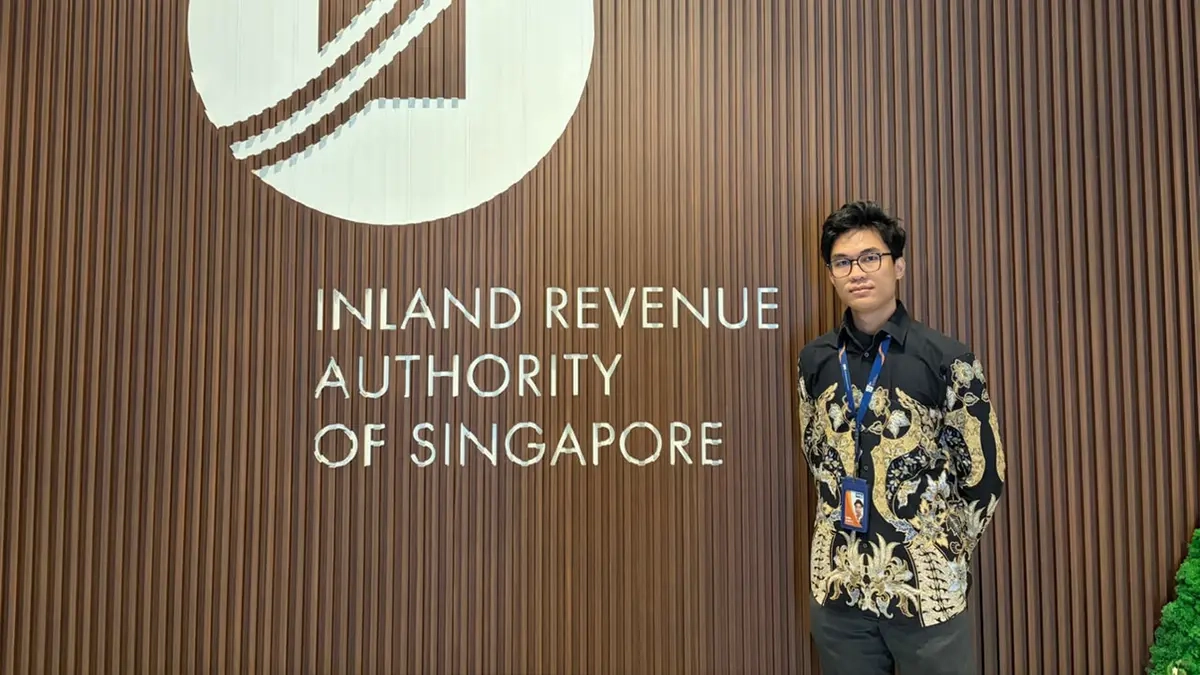
In addition to Daffa, 5 other DDTC professionals are also participating in the programme. Their participation in the training forms part of the Human Resource Development Programme (HRDP) run by DDTC.
Through this programme, DDTC provides its professionals with the opportunity to develop their competencies through various training programmes, both domestically and abroad. All costs of participation in the programme are borne by DDTC with no service bond.
DDTC Founder Darussalam, who is also one of Indonesia's leading tax experts, stated that the participation of DDTC professionals in the programme is aimed at strengthening their understanding of developments and practices in transfer pricing at the international level.
According to him, the knowledge and perspectives gained from this international training can support DDTC professionals in handling a wide range of transfer pricing issues and in delivering services and advisory to clients to a standard that exceeds expectations.
Participation in the international training programme also forms part of DDTC's commitment to continuing to invest in its human resources. Investment in human resources is pursued through various competency development programmes, including professional training and the award of scholarships for study at leading universities around the world.
This commitment is aligned with DDTC's vision of becoming a research-, technology- and knowledge-based tax institution that sets the standards and beyond. (rig)