



Challenges in Transfer Pricing Benchmarking Changes in the AI Era
SINGAPORE, DDTCNews – The search for comparable data (benchmarking) is one of the key stages in applying the arm's length principle (ALP) to transfer pricing.
However, the process of searching for and analysing comparable data is beginning to change as the use of artificial intelligence (AI) technology becomes increasingly widespread.
This development was one of the topics discussed at the WU-TA Advanced Transfer Pricing Programme 2026 in Singapore. The programme is the result of a collaboration between the WU Transfer Pricing Center at the Vienna University of Economics and Business and the Tax Academy of Singapore.
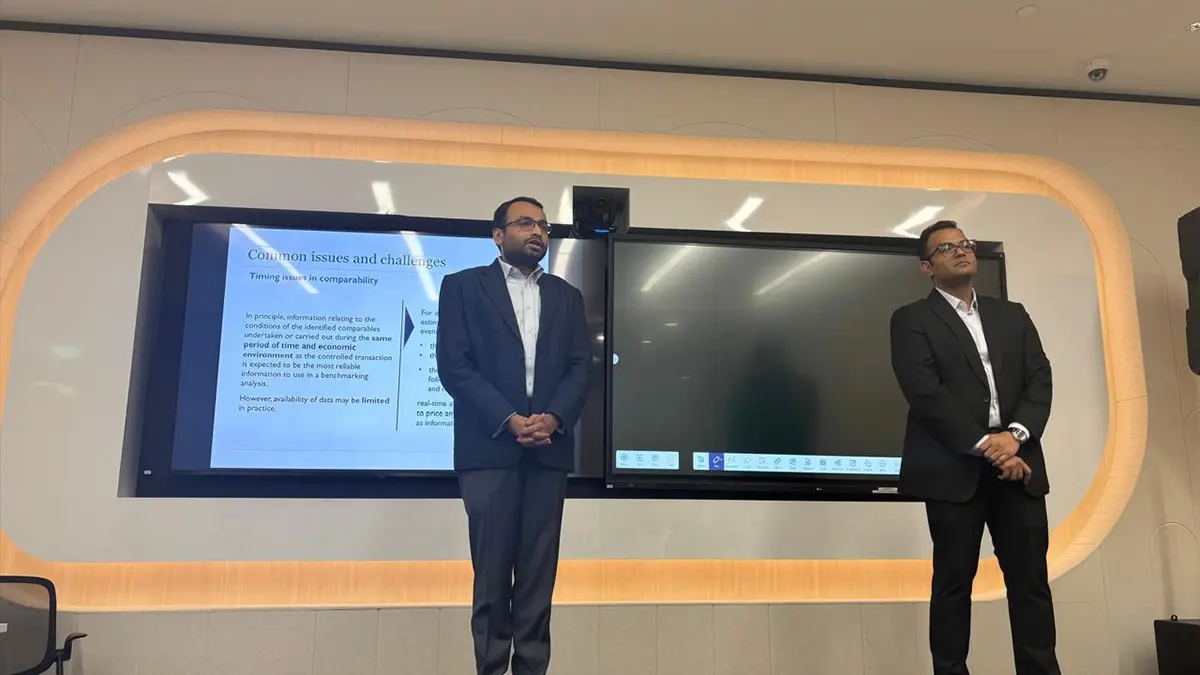
In one session, Transfer Pricing Partner at PwC Singapore, Falgun Thakkar, together with Transfer Pricing Senior Manager at PwC Singapore, Jimit Parikh, discussed benchmarking practice amidst the development of AI technology.
Falgun highlighted the changes taking place in the benchmarking process. He illustrated that around two decades ago, preparing a single benchmarking analysis could cost tens of thousands of US dollars.
Today, however, a significant portion of that work can be carried out more quickly using AI. In his view, AI may complete approximately 80% of the work involved in comparability analysis that has historically consumed practitioners' time.
Nevertheless, the effectiveness of AI remains highly dependent on the quality of the data used. Falgun summarised this in one simple principle: AI is good if the data is good.
“For the remaining crucial 20%, we still need to use our brains and bring a human perspective to the analysis, because current AI systems are not yet fully perfect,” said Falgun.
Beyond accuracy concerns, the use of AI to process benchmarking data also raises issues around data privacy and confidentiality. Practitioners need to be mindful of the risks when inputting sensitive company data into AI systems.
To manage such risks, Falgun anticipated that multinational companies would increase investment in cybersecurity infrastructure. A company's AI systems could also be developed in a closed environment, operating as though they were part of the organisation itself (agentic AI).
Falgun likened the development of AI to the invention of the automobile. The arrival of the car was ultimately followed by the construction of roads, the establishment of speed limits and the installation of traffic lights to regulate its use.
“The same applies to AI, which absolutely requires regulatory boundaries and parameters,” he said.
AI Efficiency and the Role of Human Judgement
From an operational standpoint, Jimit explained that AI technology is beginning to be used across various stages of tax practitioners' work, from modelling through to value chain analysis.
In his view, analysis that previously required up to 100 hours of manual work can now, under certain conditions, be completed in approximately 30 minutes.
“We can give AI very detailed instructions. For example, when you are searching for comparable companies that do not hold intangible assets (brands or IP),” he said.
In the past, practitioners had to examine databases or company websites one by one. Now, AI can help gather that information simultaneously, so the screening process can be completed in a much shorter time.
Jimit also gave examples of using AI to analyse industry dynamics, including the surge in margins in the glove manufacturing industry driven by high demand during the pandemic.
With AI, practitioners can gather and analyse information from various websites to help explain the commercial factors behind such margin changes. This information can then be used to support analysis when engaging with tax authorities.
The discussion on AI continued in a Fireside Chat session moderated by the Managing Director of the WU Transfer Pricing Center, Raffaele Petruzzi. One of the issues discussed was the extent to which the use of AI can ease the workload of tax practitioners and how the technology is affecting the tax profession.
In response, Founding Partner of NOEMA Global Tax and Policy Giammarco Cottani took the view that AI does not automatically eliminate the role of tax professionals. He drew an analogy between AI and the introduction of the calculator around 50 years ago, which ultimately became a tool to support work rather than replace it.
Whilst acknowledging the efficiency gains on offer, he reminded practitioners to remain cautious when using AI. He referred to a case before the Italian tax court in which a draft decision was produced using AI without an adequate review process.
“Given the risk of data hallucination, the emotional intelligence you bring to this work simply cannot be replaced by a machine. Large Language Models are highly compliant with instructions (prompts). If you enter the wrong prompt, you can receive the wrong answer,” he stressed.
A different perspective was offered by Vice President & Head of Tax (Asia Pacific, India, Middle East, Türkiye and Africa) at Procter & Gamble Vineet Rachh. He likened AI's capabilities to those of a junior associate member of staff.
In his view, AI can help prepare initial draft analyses provided it is given the right instructions. However, the resulting work still requires supervision, risk assessment, and quality clean-up by a human.
Vineet also highlighted the use of AI by tax authorities. In his view, these AI developments could affect the audit process, including the questions posed by authorities, as well as the resolution of tax disputes.
“Going forward, tax administration will become increasingly interconnected. Audits will no longer merely trace stacks of physical documents, but will shift increasingly towards audits of integrated digital systems,” he said.
Closing the session, Senior Assistant Director (Corporate Tax Division) of the Inland Revenue Authority of Singapore (IRAS) Grace Cai likened AI to a GPS navigation system.
“If you enter the wrong address, the GPS will still take you to that wrong place efficiently. In the end, you still need human judgement to realise that the direction you are heading is incorrect,” she said.
For reference, this report was written by DDTC Consulting Specialist Audreyda Farahbella Anandivi, who attended the WU-TA Advanced Transfer Pricing Programme 2026 in Singapore, held from 28 September to 1 October 2026.

In addition to Audreyda, 5 other DDTC professionals participated in the programme. Their participation in the training forms part of the Human Resource Development Programme (HRDP) run by DDTC.
Through this programme, DDTC provides its professionals with the opportunity to develop their competencies through various training programmes, both domestically and abroad. All costs associated with participation in the programme are borne by DDTC, with no service bond attached.
DDTC Founder Darussalam, who is also one of Indonesia's leading tax experts, said that the participation of DDTC professionals in the programme is aimed at strengthening their understanding of developments and practices in transfer pricing at the international level.
In his view, the knowledge and perspectives gained from such international training can support DDTC professionals in handling a wide range of transfer pricing issues and in delivering services and advisory to clients to a standard that exceeds expectations.
Participation in international training programmes also forms part of DDTC's commitment to continually invest in its human resources. Investment in human resources is carried out through various competency development programmes, including professional training and the provision of scholarships for study at leading universities around the world.
This commitment is in line with DDTC's vision of becoming a tax institution grounded in research, technology, and knowledge that sets the standards and beyond. (rig)