



Rust Conference 2026 Closes with Focus on Procedural Law

RUST, DDTCNews – Amidst the growing diversity of unilateral tax instruments, the closing session of Rust Conference 2026 highlighted an issue that is often overlooked: procedural law. It is not merely a question of which party has the right to levy tax, but also how states ensure that taxpayers obtain certainty through transparent and measurable administrative mechanisms.
In the presentation by a participant from Nigeria, advance rulings were positioned as the primary instrument for reducing disputes from the outset. Nigeria's tax legislation prescribes a written application setting out the transaction, legal basis and need for certainty, and obliges the authority to respond within 21 days with either a ruling or a reasoned refusal.
Such a ruling is fact-specific and binding only on the authority and the applicant in respect of the particular transaction. However, this protection is not absolute, as a ruling may also lapse if the law changes, if underlying assumptions are not satisfied, or if material facts differ from those submitted.
The speaker also highlighted real implementation challenges. The absence of a standard application format, the risk of administrative bottlenecks and the lack of rules for publishing anonymised rulings imply that this mechanism risks being sub-optimal if not supported by adequate procedural infrastructure.
Cross-Border Transparency
From the European Union perspective, the VAT Cross-Border Rulings mechanism demonstrates how procedures can be designed for complex cross-border transactions. Taxpayers planning transactions between participating countries may request a ruling in the country where they are registered for VAT, subject to the requirements of each jurisdiction.
This mechanism is relevant for countries facing multi-jurisdictional transactions, as it provides scope for coordination at the planning stage. However, its coverage remains dependent on the participation of the countries concerned and the design of the domestic procedures that serve as its primary port of entry.
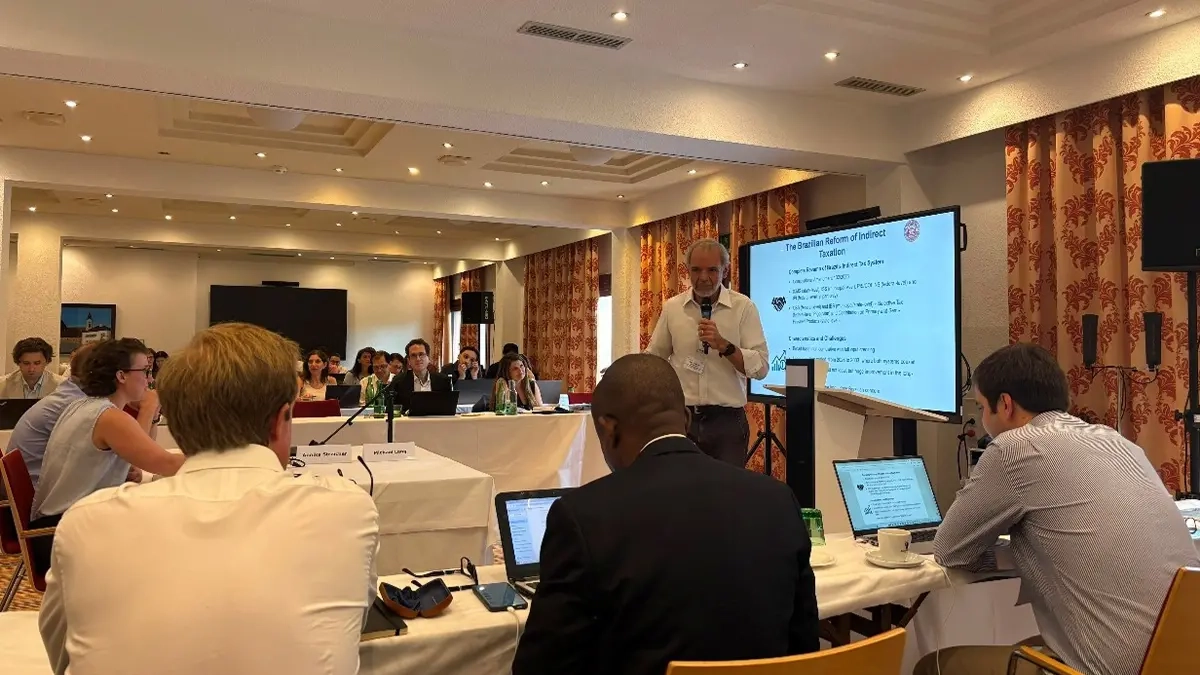 Photo caption: Prof. Luis Eduardo Schoueri, Professor of Tax Law at the University of São Paulo Law School, Brazil, providing responses and discussion at Rust Conference 2026.
Further lessons came from practice in Croatia. The sources of exchange of information (EOI) rules for VAT and digital services taxes (DST) are not uniform. In some cases, the treaty is narrow, in others broad, and in yet others extended by protocol. Accordingly, access to cross-border tax information still requires analysis on a treaty-by-treaty basis.
Towards Effective Design
The closing session revealed a common thread: procedure is not merely a complement, but part of the architecture of tax justice. Without clear procedures, ambitious substantive rules can easily become a source of uncertainty and disputes.
For this reason, ideas such as digitalisation of processes, dedicated ruling units and the publication of anonymised decisions are key to promoting consistency and accountability.
In the context of international taxation, legal certainty proves to be highly dependent on the quality of the accompanying procedures. Attention to procedural law is a prerequisite for ensuring that policy is not only legally valid, but can also be implemented effectively in practice.
As cross-border economic activity continues to grow, the interaction between indirect taxes and international treaty law becomes increasingly important.
To date, the allocation of the jurisdiction to tax for direct taxes has long been governed by bilateral tax treaties. However, comparable mechanisms for VAT, goods and services tax (GST) and DST remain fragmented.
For information, the event was closed by Prof. Michael Lang, as administrator and representative of the Rust Conference 2026 committee. Rust Conference 2027 will subsequently be held in Rust, Austria on 1–3 July 2027 with the theme Tax Secrecy vs. Freedom of Tax Information. (rig)
*This article is based on reporting by Senior Specialist of DDTC Consulting, Dawud A. Q Lubis, and Specialist of DDTC Fiscal Research & Advisory, Abiyoga S. Wiyanto.