



Authorities Highlight Economic Ownership in Global IP Tax Planning
SINGAPORE, DDTCNews - Amidst the rapid growth of the global digital business ecosystem, intellectual property (IP) ownership strategies are no longer solely a matter of local legality, but have also become part of cross-border business strategy. Multinational companies are increasingly progressive in separating legal ownership from economic ownership.
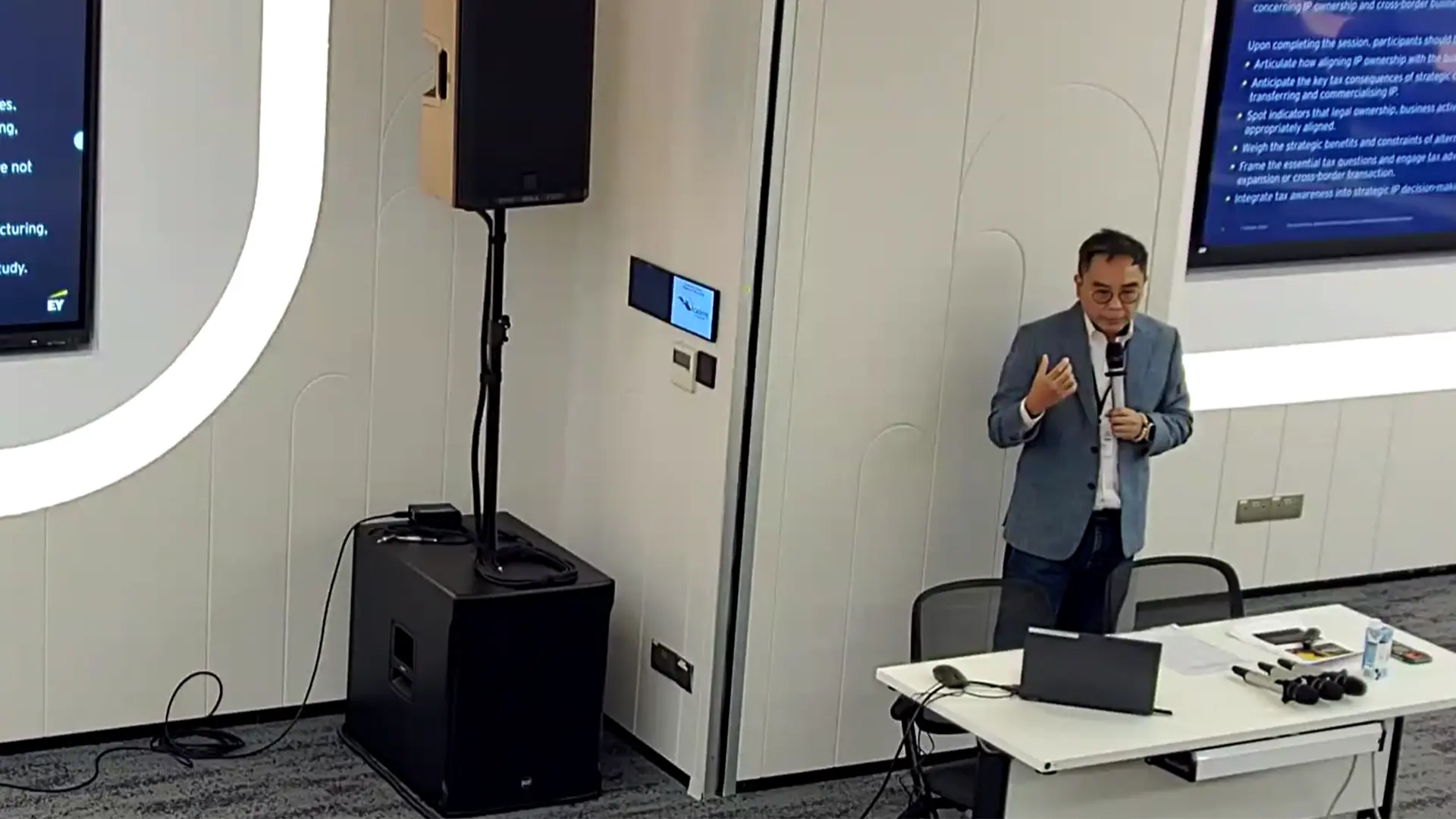
This point emerged on the third day of the Integrated IP, Valuation, and Tax (IIVT) Course for Decision Makers programme organised by the Tax Academy of Singapore. The session, entitled Tax Structuring: Aligning IP/IA and Business Models, was presented by international tax expert Chester Wee.
Chester explained that in the previous decade, IP tax planning tended to be carried out by placing assets in offshore low-tax jurisdictions, such as Bermuda or the British Virgin Islands (BVI). However, these traditional schemes are no longer effective.
"Global tax authorities are now more astute in applying the principle of substance over form, namely evaluating the substance of real economic activity rather than merely inter-company legal documents," Chester asserted.
Examining Legal and Economic Ownership and How to Determine Them
In the context of international taxation and transfer pricing, legal ownership focuses solely on the entity formally registered as the holder of a patent, trade mark, or copyright at a registration body. Economic ownership, by contrast, focuses on the party that assumes financial risks, makes investments, controls critical functions and takes strategic decisions regarding the exploitation of IP.
It is the entity holding economic ownership that is substantively entitled to enjoy the residual return from IP exploitation. In modern tax practice, profit or royalty allocation is based on that economic ownership.
To determine economic ownership accurately, companies must follow four strategic steps.
First, analyse contributions through the DEMPE framework. Companies must set out the contribution of each entity in the group through the functions of development, enhancement, maintenance, protection and exploitation. The entity holding a dominant role in performing and controlling DEMPE functions is recognised as the economic owner.
Second, assess risk and financial control. Tax authorities distinguish between capital providers and risk managers. Companies must demonstrate the existence of significant people functions, namely functions performed by executives or professionals who independently make strategic decisions relating to research and development (R&D) and risk mitigation. Funders without operational control are entitled only to a risk-adjusted return, not the entirety of the residual profit.
Third, align economic substance with inter-company contracts. The principle of substance over form requires that operational reality on the ground is consistent with contractual clauses. Companies must avoid the use of shell entities (paper companies) and ensure the availability of physical offices, genuine operational activity and qualified employees in the jurisdiction where the entity is registered. Intercompany licence agreements and royalty allocations must also be updated on a regular basis.
Fourth, prepare comprehensive and up-to-date transfer pricing documentation. To withstand an audit by tax authorities, companies are required to prepare robust transfer pricing documentation (TP Doc) to demonstrate the determination of an arm's length return. Supporting evidence (audit trail), such as board meeting minutes, R&D decision records and project correspondence, must be retained in an orderly manner.
A Practical Dilemma: Managerial Control vs. Operational R&D
In practice, debate frequently arises regarding where the true substance of IP actually resides: whether it is sufficient at the operational level or must also encompass the managerial level.
In response to the question of whether the presence of a head of R&D at the IP-owning entity's location is sufficient, Chester affirmed that the presence of a head of R&D alone is not enough.
"Control of DEMPE functions requires a complete leadership ecosystem, including the involvement of a business general manager (GM) as the holder of control over commercialisation decisions and IP exploitation strategy in the market," Chester explained.
Locating an IP-owning entity in a particular jurisdiction, such as Singapore, requires a complete leadership ecosystem to be in place. If strategic decisions and primary risk control are not conducted at that location, tax authorities may question the legitimacy of the economic substance of the entity concerned.
One classic scenario frequently encountered in global supply chains is the separation of the location of technical research activities from the location of the IP-owning entity. As an example, a corporate group conducts substantial R&D activities in India whilst the IP-owning entity is situated in Singapore.
From a taxation and transfer pricing perspective, there are three matters to consider.
- The local R&D entity as a service provider. Research teams in the country where operational activities take place, such as India, are generally categorised as contract R&D service providers. They implement technical instructions without holding control over strategic decisions or the risk of project failure.
- Service-based remuneration (cost-plus). In respect of their technical contribution, service provider entities are entitled only to receive remuneration based on costs plus a reasonable margin (cost-plus return).
- Residual profit. The central entity that places the R&D leadership and business GM at its location and fully assumes financial risks there is allocated as the economic owner entitled to the residual profit from IP commercialisation.
Economic Substance as a Reflection of Value Creation
The need for economic substance is not merely a formality for tax compliance, but is also rooted in commercial business logic.
In an arm's length licence transaction, a licensee would not be willing to surrender the largest share of profit to a legal IP owner that makes no genuine contribution to the value chain.
Ultimately, the shift in focus from legal ownership to economic ownership reflects the commercial logic of true commercialisation and value creation. This has become a strategic imperative for multinational companies seeking to build an intellectual property structure that is robust, efficient and tax-compliant in the digital era.
Report from Singapore
For information, this report was written by DDTC Consulting Manager Wulan Clara Kartini, who attended the Integrated IP, Valuation & Tax (IIVT): A Strategic Toolkit for Decision-Makers programme. The programme was held on 5–7 October 2026 in Singapore.
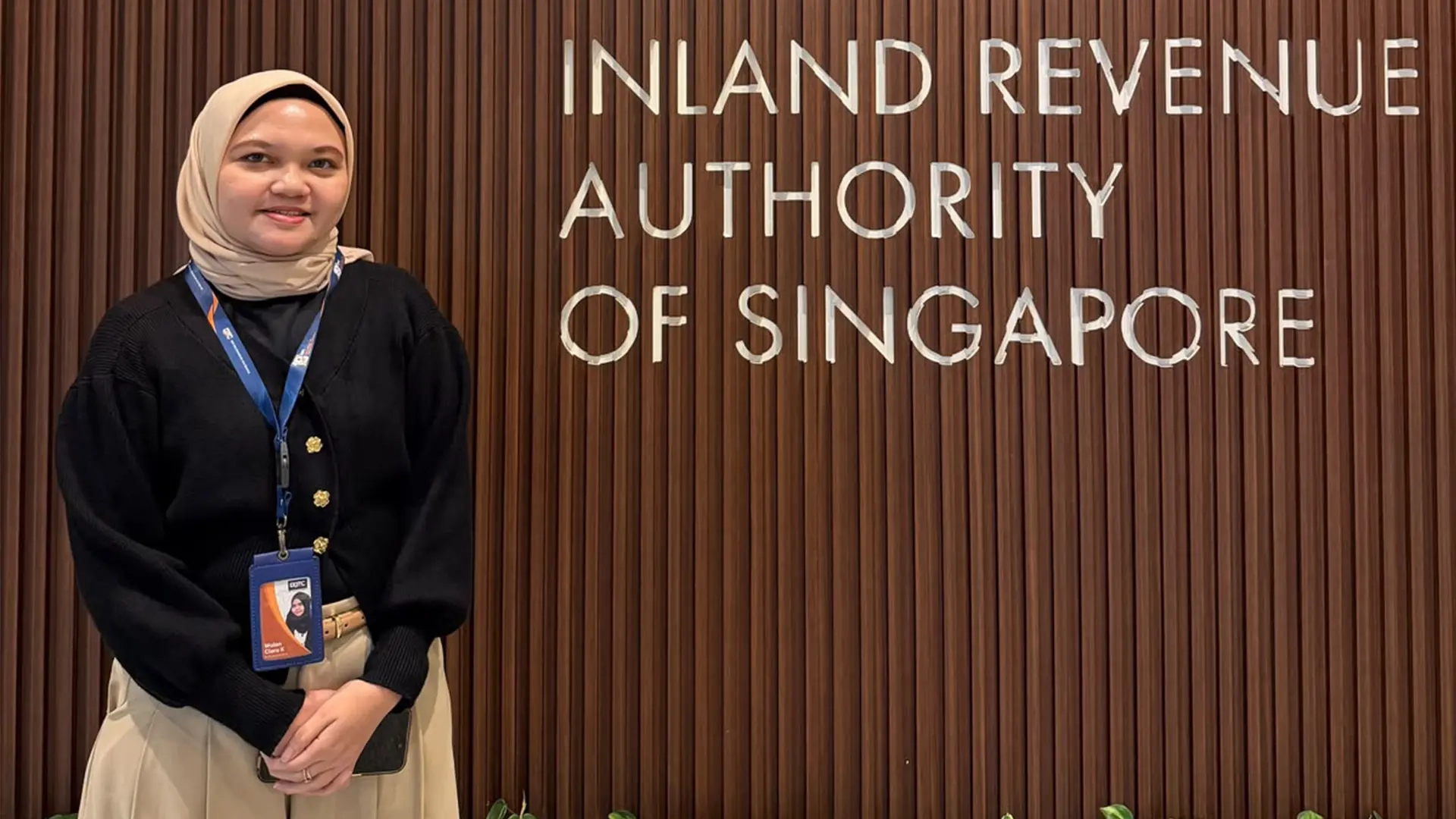
In addition to Wulan, DDTC Consulting Senior Managers, Khisi Armaya Dhora and Muhammad Putrawal Utama, also participated in the IIVT programme. The participation of these professionals in this training forms part of the Human Resource Development Programme (HRDP) that DDTC consistently runs.
Through this programme, DDTC provides its professionals with the opportunity to participate in various competency development programmes, both domestically and abroad. All costs of participation in the programme are borne by DDTC with no service bond attached.
DDTC Founder Darussalam stated that DDTC consistently provides its professionals with the opportunity to enhance their competencies through various education and training programmes, both domestically and abroad.
In his view, the participation of DDTC professionals in these various programmes is expected to broaden their outlook whilst strengthening competencies in keeping pace with developments in knowledge and tax practice at the global level. (dik)