



Paying for Foreign Services: When Is It a Royalty?
JAKARTA, DDTCNews - When a domestic company pays fees to a service provider domiciled overseas, an important question arises regarding the classification of that income. Does such remuneration constitute business profits or can it instead be categorised as a royalty under a tax treaty?
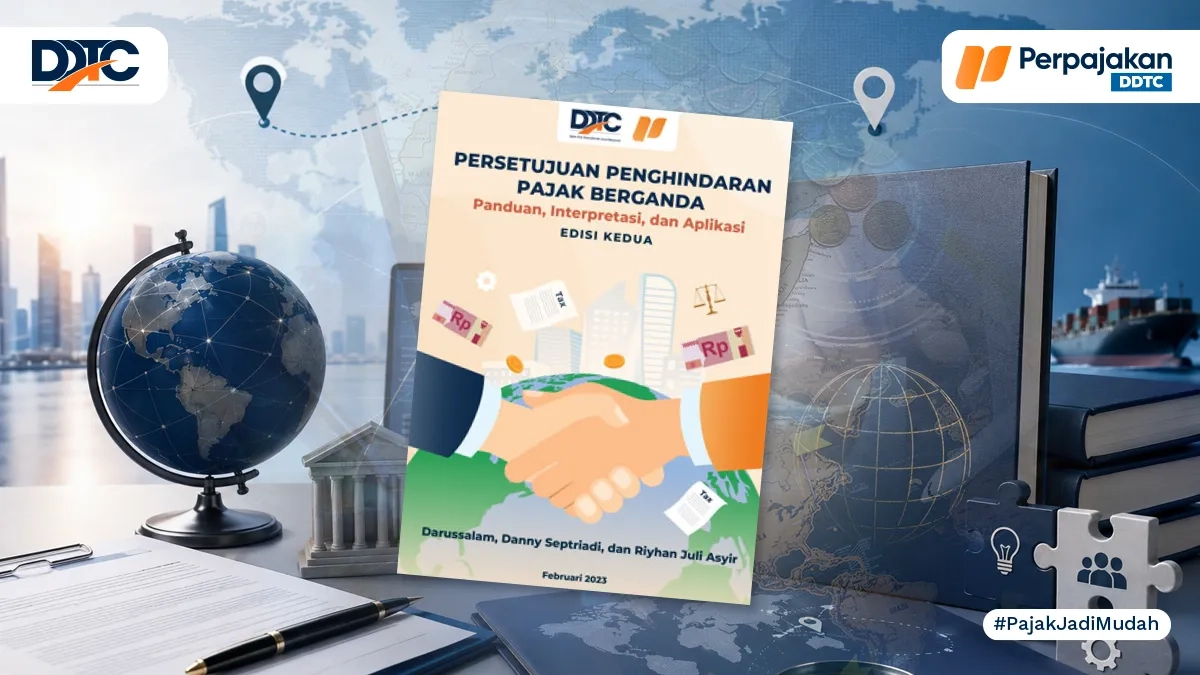
This distinction in categorisation is crucial because it has implications for the source country's jurisdiction to tax. The issue is discussed in depth in the book Persetujuan Penghindaran Pajak Berganda: Panduan, Interpretasi, dan Aplikasi (Edisi Kedua), with reference to Article 7 and Article 12 of the OECD Model.
The book sets out 5 steps for assessing the classification of service income as a royalty. First, service income is in principle categorised as operating profit under Article 7 paragraph (1). Operating profit has a broad meaning and encompasses all types of income from business activities, including income from services.
Second, the classification of service income as operating profit does not apply unconditionally. Article 7 paragraph (4) of the OECD Model or Article 7 paragraph (6) of the UN Model provides that where another substantive article more specifically governs a particular type of income, that article shall take precedence (special provisions).
Accordingly, Article 7 paragraph (1) applies only to service income that does not fall within the scope of any other substantive article.
Third, one substantive article that may potentially supersede the application of Article 7 is Article 12 paragraph (2) on royalties, particularly in relation to payments for "information concerning industrial, commercial or scientific experience". This concept is known in practice as know-how.
In assessing the third step, the primary distinction between the provision of ordinary services and the provision of know-how lies in the imparting principle. This principle focuses on the transfer of specialised knowledge from the grantor to the licensee, such that the licensee can learn and apply it independently, akin to the relationship between a teacher and a student.
This differs from the provision of services, where the service provider uses their expertise to complete a task rather than to teach it to the service recipient. The book sets out supporting criteria for assessing whether the know-how element is present.
As such, what are the supporting criteria for the know-how element? What are the subsequent steps for assessing the taxation of service income derived from overseas?
Find the answers in the Second Edition of the tax treaty book authored by Darussalam, Danny Septriadi and Riyhan Juli Asyir. The book presents this five-step framework for classifying service income as a royalty in a systematic and sequential manner.
The analysis is further supplemented by an illustration of the effectively connected test as well as a discussion of a number of international jurisprudence cases, which enrich the understanding of how the royalty concept applies to services in practice.
Comprising 27 chapters, the book examines the guidance, interpretation and application of tax treaties in a comprehensive and systematic manner, ranging from the fundamental concepts of international taxation and the development of tax treaty models, through to an article-by-article interpretation, including a dedicated discussion on tax treaties in relation to royalties.
Each discussion is also accompanied by the latest developments surrounding tax treaties and Base Erosion and Profit Shifting (BEPS) issues. Interested in adding a tax treaty reference to your book collection? A tax treaty and English-language SDSN Reference Package is now also available, combining this book with the English Edition of the SDSN, which contains translations of the latest Income Tax Law and General Procedures and Tax Provisions Law.
The package can be ordered via store.perpajakan.ddtc.co.id and delivery charges for this book package are waived or free of charge. Have inquiries about this book? Contact the DDTC Tax Hotline on WhatsApp at 0813-8080-4136 (Siska). (rig)