



Artificial Intelligence in Tax Disputes: Opportunity or Threat?
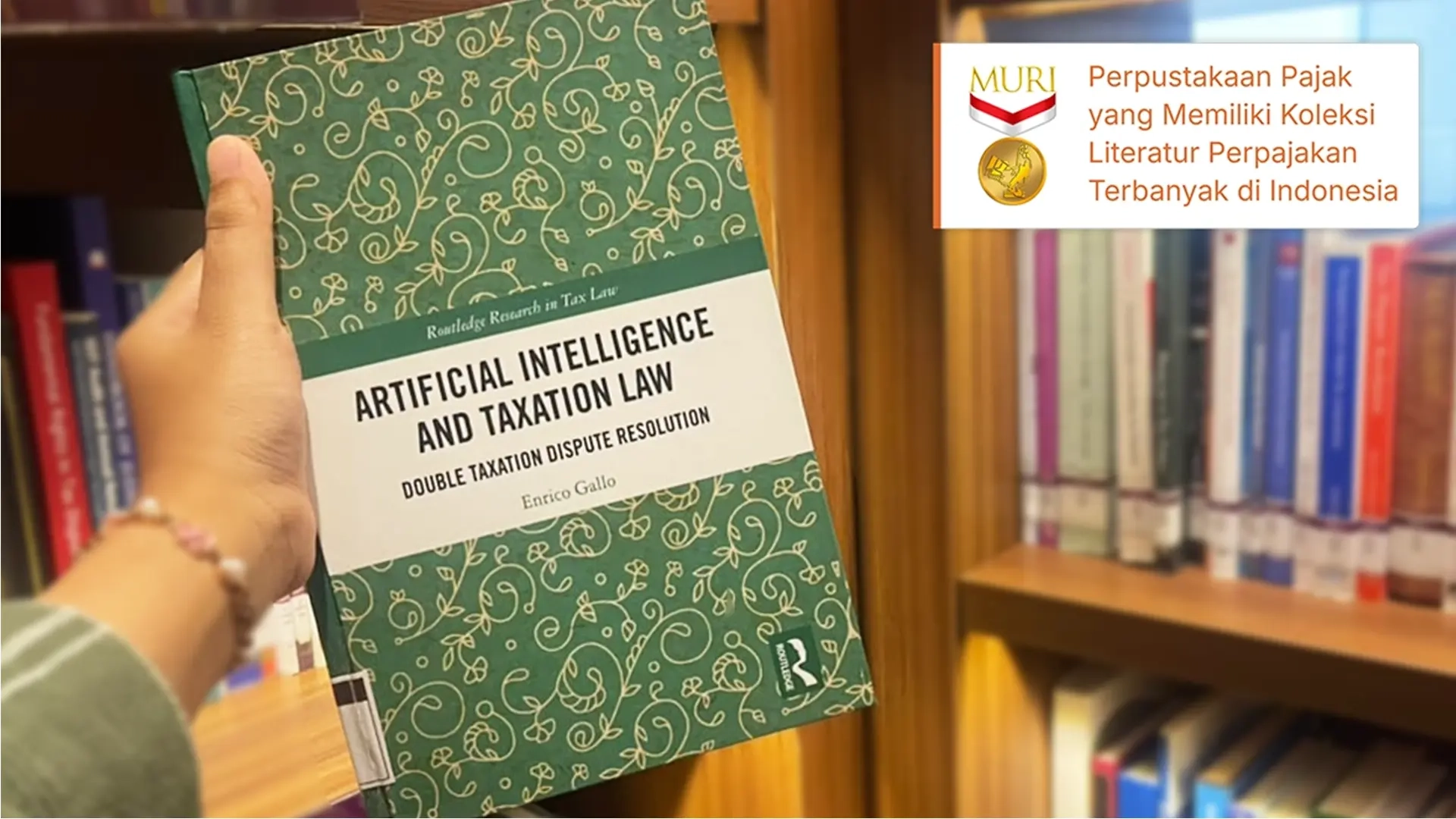
GLOBALISATION has directly contributed to the surge in double taxation disputes occurring across jurisdictions. This phenomenon is examined by Enrico Gallo, holder of an LLM from WU Vienna and a PhD from the University of Alicante, in his book Artificial Intelligence and Taxation Law: Double Taxation Dispute Resolution.
Gallo begins his book by tracing the distinction between juridical double taxation and economic double taxation.
According to Gallo, transfer pricing disputes frequently serve as the primary trigger for economic double taxation. This arises from mismatches in the application of the arm's length principle between tax authorities in their respective jurisdictions.
Inefficiency in synchronisation between those tax authorities ultimately creates a deadlock for taxpayers. To break through this impasse, Gallo poses a provocative question:
"Can artificial intelligence (AI) replace the role of humans in deciding the resolution of international tax disputes and transfer pricing?”
Before answering that question, Gallo classifies the current instruments for international tax disputes into two broad groups with varying degrees of legal certainty.
First, as prevention instruments, namely Advance Pricing Agreements (APAs), joint audits and safe harbours. Second, as resolution instruments, namely the Mutual Agreement Procedure (MAP) and arbitration.
Gallo further focuses on MAP and arbitration as the primary instruments for resolving double taxation disputes, which constitute the main focus of this book. He finds that MAP is ineffective in resolving double taxation disputes (OECD, 2023), particularly in terms of resolution duration and the volume of disputes that must be handled.
To address this, Gallo outlines three technical taxonomies that must be considered when designing an AI architecture for double taxation dispute resolution.
First, classification of the type of AI to be implemented (analytical AI, functional AI, interactive AI, visual AI or textual AI). Second, the capacity of AI to simulate specific tasks (weak vs strong AI). Third, the AI's ability to endure a rigorous lifecycle.
The book explores the use of supervised learning in processing texts or written documents. Here, algorithms are trained using previously decided disputes to predict the outcomes of future disputes.
However, Gallo finds that the effectiveness of AI in MAP is highly dependent on three conditions of extreme precision: identity of facts, normative identity, and identity of authority.
As a conclusion, Gallo offers a critical review of the aspects of fairness, transparency and taxpayers' rights in the context of the 'Black Box' phenomenon that occurred in the Netherlands. The failure of AI to predict tax fraud in a dispute decided by a court in The Hague in 2020 demonstrates that AI without supervision becomes a double-edged sword.
In the context of dispute resolution, Gallo reaffirms that the role of the taxpayer, which has been long regarded as an "invisible party", warrants re-examination. The current use of AI is not yet capable of replacing human intuition, creativity and legal reasoning.
Nevertheless, AI is highly valuable as a preparatory tool capable of expediting administrative processes that have hitherto burdened MAP.
As a recommendation, Gallo proposes that every MAP decision should be published in abstract and anonymised form so that algorithms may be trained in the future in the interests of legal certainty.
In addition, the development of AI in tax law must place the protection of taxpayers' rights as the primary parameter.
This book stands as a work that bridges developments in tax administration with the potential of digital technology, particularly AI. Gallo's discussion demonstrates that AI has considerable scope to help create a more efficient and transparent international tax dispute resolution process, even though it cannot yet fully replace the role of humans.
Interested in reading this book? Please visit DDTC Library.
To date, DDTC Library holds a total of 5,053 literature collections supporting the study of taxation as a multidisciplinary field and has received the MURI record as the Tax Library with the Largest Collection in Indonesia on 10 July 2026.
Before visiting DDTC Library, members of the public may first confirm their visit via hotline: +62-21-2938-2700 or email: [email protected]. You are also welcome to visit the DDTC Library Instagram account for the latest information relating to tax literature. (dik)