



Exploring the Human Dimension of Taxation
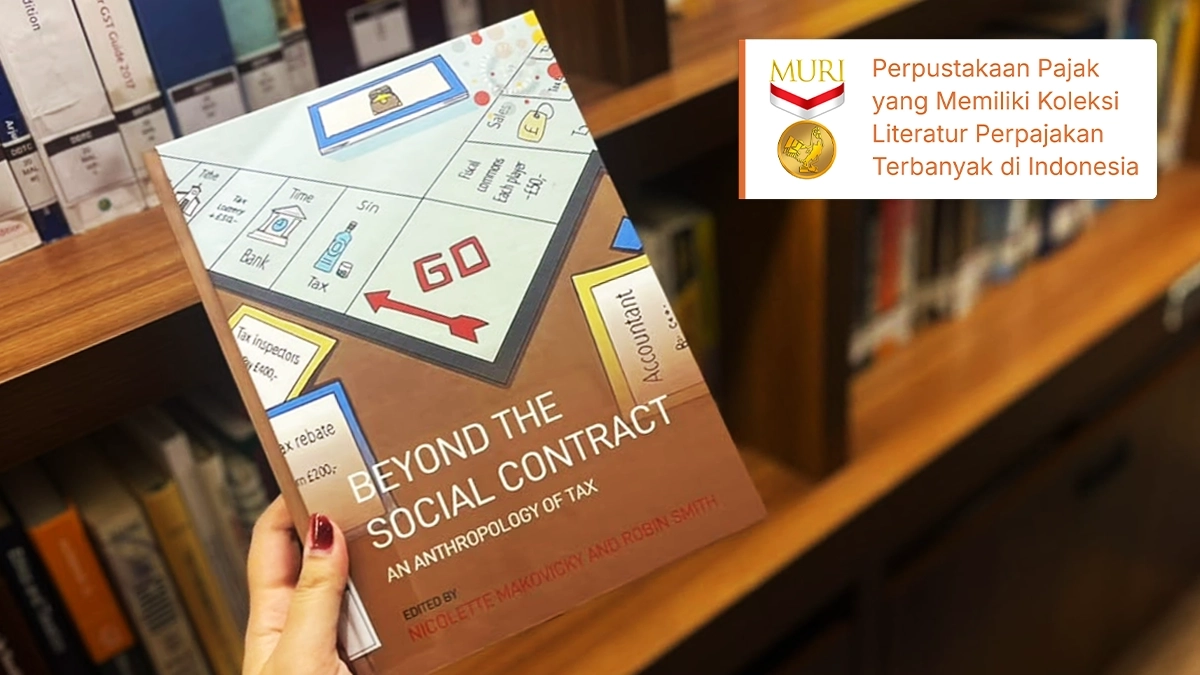
IN the discourse of fiscal policy, tax is regarded as an inevitability of a social contract. Yet it is rare for fiscal policy to examine taxation in depth from the perspective of humanity and the relationships that shape it.
The book entitled Beyond the Social Contract: An Anthropology of Tax pioneers the discipline of tax anthropology, a field that surprisingly offers a fresh lens through which we may understand the relationship between tax authorities and taxpayers beyond the columns of financial balance sheets.
Edited by Nicolette Makovicky and Robin Smith, this book emerges as a breakthrough that critiques Benjamin Franklin's (1789) classical paradigm regarding the certainty of 'taxes and death'. Through an anthropological lens, taxation is redefined as a 'ritual of citizenship' and a manifestation of 'moral economy'.
The contributors to this book dismantle longstanding assumptions, particularly the concept of 'fiscal exchange' popularised by Margaret Levi (1988). Theoretically, this concept is flawed because it disregards social complexity.
Fiscal relations are in fact rooted in power struggles, conquest and gradual shifts in state power (usurpation, conquest and gradual shifts), and citizens in reality have very limited options to exit the system.
To understand the full anatomy of taxation, Makovicky and Smith view it as one part of a broader social, religious or community spectrum.
In a study conducted by Miranda Johansson in Bolivia, citizens pay tax merely to 'purchase' the right to citizenship and ownership, albeit through an extremely cumbersome process. They prefer to 'invest' their income in trade unions and neighbourhood associations rather than pay tax.
Meanwhile, in Croatia, Smith found that lower-middle-class citizens were left anxious by tax reform through the fiskalizacija policy, an IT system that proved to make it more difficult for them to conduct business, thereby eroding trust in the government.
In Ghana, Anna-Riikka Kauppinen observed competition between the state and church tithes. Middle-class residents of the capital prefer to pay contributions to the church, as it provides more tangible benefits or returns.
Beyond these cases, there are further noteworthy findings in several other countries that underscore a paradigm shift: taxation is a phenomenon that goes far deeper than the social contract. Tax is a battleground of morality and sovereignty.
This book conveys a fundamental message for the future of taxation. For tax authorities, reform will not achieve its objectives unless it is accompanied by the capacity to humanise fiscal exchange and to regard taxpayers as strategic partners.
This is in keeping with the views expressed by Darussalam, Danny Septriadi, B. Bawono Kristiaji and Denny Vissaro, all four of whom are leading tax experts in Indonesia, in their book entitled Era Baru Hubungan Otoritas Pajak dengan Wajib Pajak concerning a paradigm of cooperative compliance based on transparency and participation. The relationship between tax authorities and taxpayers is driven by a mutual desire to be transparent, open and receptive (participatory).
As emphasised by one of the contributors, Soumhya Venkatesan, uniting the anthropology of ethics and the anthropology of tax is key to understanding modern economic justice. This book effectively 'democratises fiscal conversation', encouraging readers to view taxation as a tool for social justice that must be understood through the pulse of society, rather than merely from a bureaucrat's desk.
Interested in reading this book? Please visit DDTC Library.
To date, DDTC Library holds a total of 5,053 literature items supporting the study of taxation as a multidisciplinary field. This collection comprises core tax collection books and complementary tax collection books.
DDTC Library has been awarded the MURI record as the Tax Library with the Largest Collection in Indonesia. The award ceremony was held at DDTC Library on 10 July 2026.
Before visiting DDTC Library, members of the public may first confirm via hotline: +62-21-2938-2700 or email: [email protected]. Please also visit the Instagram page of DDTC Library for the latest information relating to tax literature. (dik)