



Unification of Tax Court Expected to Establish Legal Consistency
JAKARTA, DDTCNews - The unification of the tax court under one roof is expected to establish uniformity in the application of law within Indonesia's tax judiciary system.
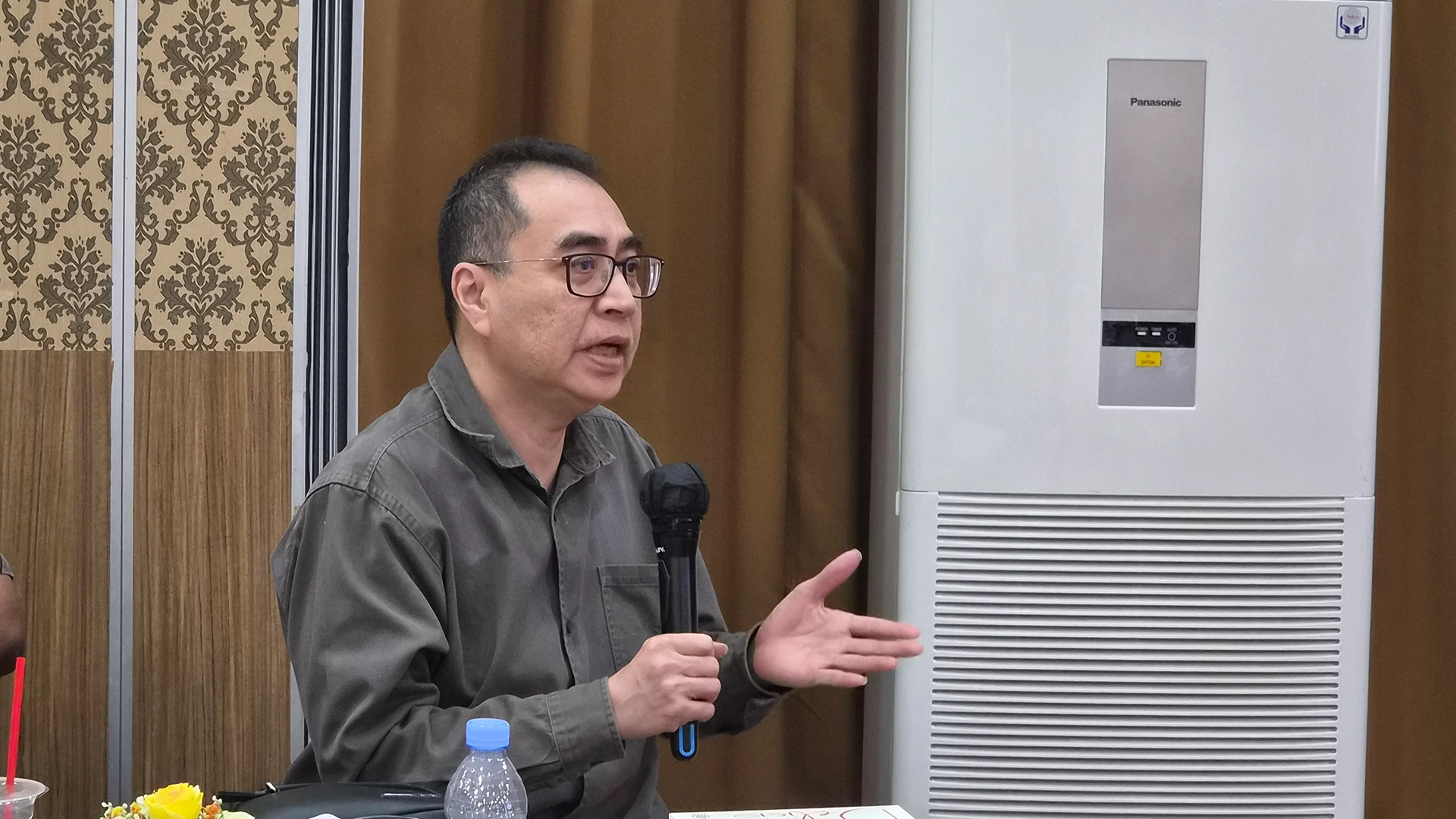
DDTC Co-founder Danny Septriadi said that legal uniformity is what taxpayers have been anticipating amid the ongoing process of unifying the tax court under one roof.
"We hope that inconsistency in decisions relating to the same subject matter of the dispute will no longer occur," said Danny at a public consultation on the draft presidential regulation on the Transfer of Organisational, Administrative and Financial Guidance of the Tax Court from the Ministry of Finance (MoF) to the Supreme Court, on Wednesday (23/9/2026).
Danny noted that consistency of decisions would produce legal uniformity whilst also reducing the number of tax disputes at both the appeal level and the civil review (peninjauan kembali/PK in Indonesian) level.
In any case, he continued, the rise in the number of tax cases contested up to the appeal level at the tax court and civil review at the Supreme Court is due, in part, to inconsistency in decisions and a lack of legal uniformity.
"We taxpayers, as the primary stakeholders, hope for legal certainty to prevent recurring disputes. We hope that [decisions] can become jurisprudence, thereby providing predictability," he said.
Legal uniformity and consistency of decisions at the appeal and civil review levels will ultimately be followed by consistency in the implementation of tax rules at the level of the tax authority. Where decisions on a particular tax case remain consistent, the tax authority will refer to those decisions during the audit and objection processes.
The above aspirations are in line with the message conveyed by DDTC Founder Darussalam in a Perspective piece entitled Building Legal Consistency via a Tax Chamber at the Supreme Court. In his perspective, Darussalam stated that consistency of decisions and uniformity in the application of law would benefit taxpayers, legal representatives, and the government.
For taxpayers, consistency of decisions and uniformity in the application of law will provide a better basis for understanding the tax implications of a given transaction.
For attorneys, consistency of decisions and uniformity in the application of law will serve as a reference point for providing advice, constructing arguments and assessing whether a dispute merits continuation or discontinuation.
For the government, consistency of decisions and uniformity in the application of law can serve as a reference for maintaining administrative consistency whilst also providing feedback on regulations.
"Matters whose tax law position has been sufficiently settled need not continually become an arena for the same debate. Resources can be directed more towards compliance risks, new transactions and legal issues that are genuinely still open or more strategic in nature," explained Darussalam in the aforementioned Perspective piece.
Responding to the above aspirations, substitute registrar of the Tax Court Secretariat, Aditya Agung Priyo Nugroho, who served as a speaker at the public consultation, said that the unification under one roof would strengthen the Supreme Court's supervision of tax court decisions.
The strengthening of supervision is expected to reduce disparities in disputes and produce consistency of decisions and uniformity in the application of law within the tax judiciary system.
"It is expected that we can indeed improve this once the tax court falls fully under the Supreme Court. Thus, guidance on procedural law and the quality of decisions can become entirely the Supreme Court's concern," said Aditya.
For information, the unification of the tax court under the Supreme Court is also discussed in the book by DDTC and LeIP entitled Kajian Persiapan Penyatuan Atap Pengadilan Pajak dari Kementerian Keuangan Kepada Mahkamah Agung. (rig)