



The Role of Social Norms in Driving Tax Compliance
TAX compliance is not determined solely by the prevalence of law enforcement or the severity of penalties. Both aspects are important, but they are not the only reasons that determine whether an individual or taxpayer is willing to fulfil their tax obligations.
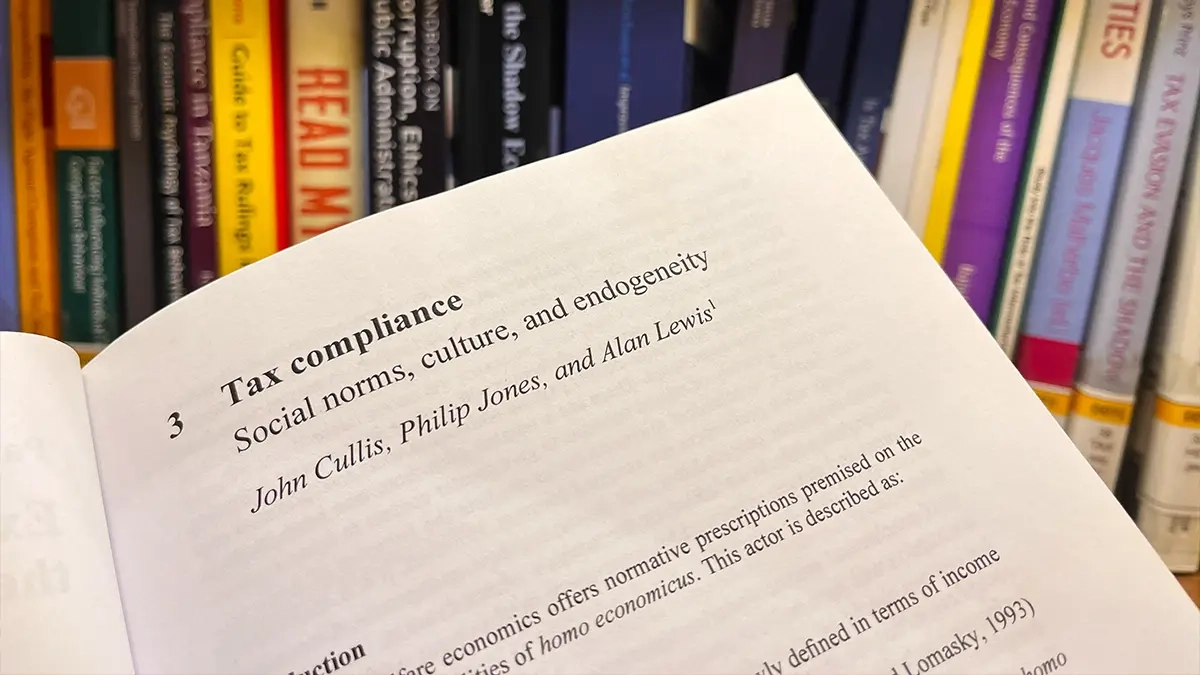
John Cullis, Philip Jones and Alan Lewis, in their article entitled Social Norms, Culture, and Endogeneity (2010), state that a taxpayer's decision to comply with their tax obligations is not based solely on financial cost-benefit considerations or on fear of threatened fines and penalties.
In the article by Cullis et al., published in a book entitled Developing Alternative Frameworks for Explaining Tax Compliance (2010), many non-economic factors are also identified as influencing whether a taxpayer complies or not, including social norms, culture and psychology.
The Great Dictionary of the Indonesian Language (Kamus Besar Bahasa Indonesia/KBBI in Indonesian) defines a norm or social norm as a rule that governs human conduct in relations with others.
Social norms are also understood as shared understandings about actions that are obligatory, permitted or prohibited (Crawford and Ostrom, 2000). However, the norms learnt by each individual may vary, depending, in part, on the cultural exposure within their respective environment.
To illustrate the relationship between social norms and tax compliance, statistical analysis shows that there is a correlation between norm strength and norm prevalence.
Norm strength is the proportion of society that believes they ought to pay taxes honestly, regardless of whether they actually do so. Norm strength therefore reflects what society considers to be the right thing to do, not what they actually do.
Norm prevalence, on the other hand, is the proportion of society that genuinely abides by that norm. Norm prevalence tends to be influenced by the strength of the norm to pay taxes honestly.
This implies that the more people believe that paying taxes honestly is an obligation, the more people will actually behave honestly when paying their taxes.
Equilibrium is achieved when the proportion of society that thinks and believes they should comply with the norm equals the number of people who actually do comply with the prevailing norm (norm strength = norm prevalence).
In practice, however, the relationship between these two variables is not always in equilibrium, because patterns of social behaviour vary considerably. It is possible that many people believe they should pay taxes honestly, yet not all of them do so (norm strength is greater than norm prevalence).
Conversely, it is possible that many people comply with their tax obligations, yet do not hold a strong moral conviction to abide by the prevailing norm (norm strength is lower than norm prevalence).
It should also be noted that the norms prevailing in society do not arise spontaneously; they are also shaped by culture, political factors, religious teachings and other social factors, such as education, experience, and the surrounding environment.
According to the social norms approach discussed by Cullis et al., tax compliance is not determined solely by audit and law enforcement, but also by the balance between what society believes to be correct behaviour (norm strength) and what society actually does (norm prevalence).
Consequently, the level of tax compliance in a given country may differ. Tax compliance is therefore regarded as the combined product of factors internal to society, namely, moral values and social norms, and external factors, such as the rigour of law enforcement and the performance of the tax authority. (rig)