



DDTC Professional Discusses Turnover Taxes at Rust Conferenc
RUST, DDTCNews – Against its historic backdrop, Rust illustrates how a local economy can thrive through small-scale family enterprises. A row of Buschenschank—traditional wine taverns and restaurants—forms the main pulse of economic activity in the town, whilst reflecting the significance of the domestic consumption sector to the sustainability of the local community.
That landscape serves as a reminder that behind every day-to-day transactions lies a consumption tax system underpinning state revenues. This perspective came to the fore at Rust Conference 2026, when experts discussed the direction of turnover taxes amidst the rapid transformation of the digital economy.
Participants agreed that the future of taxation is no longer determined by whether a new type of tax is needed. The real challenge is how states can expand their jurisdiction to tax without sacrificing legal certainty, neutrality or the smooth flow of cross-border trade.
Remaining the Mainstay
From the many perspectives shared by various countries, one pattern is clearly visible. Rather than introducing a digital services tax (DST), a growing number of countries are choosing to strengthen value added tax (VAT) or goods and services tax (GST) as the primary instrument for taxing digital economic activity. Established instruments are deemed more readily adaptable than building an entirely new tax regime.
Indonesia is a case in point. The government opted to integrate the taxation of electronic commerce (e-commerce) into the VAT regime introduced in 2020. Under this scheme, foreign digital service providers are appointed as VAT collection agents if they satisfy the transaction threshold or number of users in Indonesia.
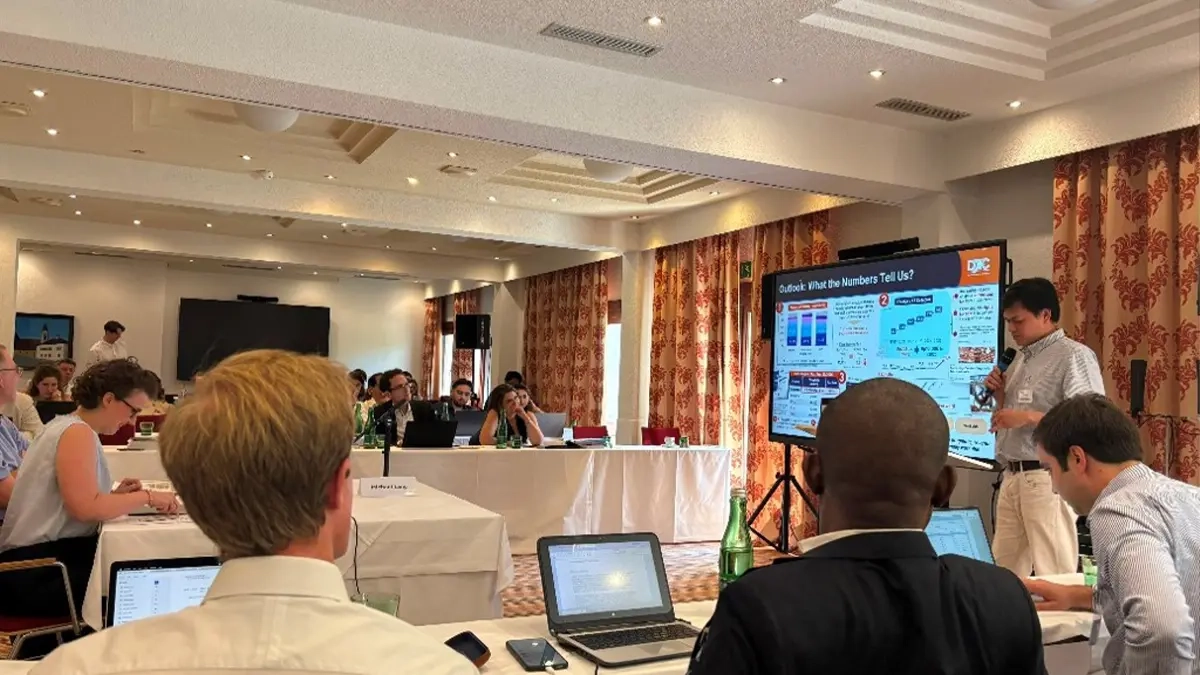
This approach demonstrates that the expansion of the tax base is being pursued through the existing VAT framework rather than through a separate levy. The Indonesian perspective was presented by Senior Specialist of DDTC Consulting, Dawud Abdul Qohhar Lubis, under the title Outlook on the Future of Turnover Taxation from Indonesian Perspective.
A similar direction is visible in India and Egypt. India continues to refine its GST system, including refund mechanisms to preserve tax neutrality and to ensure that refunds are only granted to parties that have genuinely borne the tax burden.
On the other hand, Egypt has strengthened its VAT regime for foreign digital service providers through the Simplified Registration Vendor's Regime (SRVR), complete with a consumer-location-based approach and a reverse charge mechanism for business-to-business transactions.

Photo caption: Buschenschank, traditional wine taverns and restaurants operated by local residents, are one of the drivers of the economy of the City of Rust, Austria, whilst preserving local culture and identity.
Jeffrey Owens, one of the world's leading international tax experts, regards the widespread use of technology in tax administration and collection, as is being pursued by Indonesia, Egypt and other countries, as a positive development.
“What Indonesia, Egypt and other countries are doing in strengthening digitalisation and technology within their tax systems represents a strong foundation for the future. It is not merely about how to collect state revenues. It goes further than that and also enhances the aspect of fairness,” he said.
Nevertheless, participants' presentations demonstrated that the expansion of the jurisdiction to tax has not always been accompanied by adequate dispute resolution mechanisms.
Egypt, for instance, explicitly acknowledges that it does not yet have a unilateral mechanism to address juridical double taxation in cross-border VAT. The Egyptian government prefers to rely on place-of-supply rules to prevent disputes from the outset.
South Africa faces a different challenge. The country does not yet have explicit place-of-supply rules as recommended by the OECD.
Consequently, differences in determining the place of consumption with other jurisdictions risk giving rise to double taxation or double non-taxation. On the other hand, South Africa has also chosen not to implement a DST.
Policy Direction
These four countries provide an indication of the direction in which turnover taxes will develop in the near future. The policy focus is no longer directed at establishing new types of taxes, but at refining the design of VAT or GST to enable them to keep pace with changing business models.
The digitalisation of administration, the simplification of registration for foreign entrepreneurs and the strengthening of collection mechanisms are becoming increasingly prominent items on the agenda.
However, this discussion also revealed that the greatest remaining challenge lies in the area of international coordination. As each country improves its system at a different pace, the risk of regulatory misalignment grows ever more significant.
Ultimately, the future of turnover taxes will be determined not only by a state's capacity to collect tax, but also by its willingness to build common ground for the expansion of the jurisdiction to tax so that it does not become a source of new disputes. (rig)
*This article is based on reporting by Senior Specialist of DDTC Consulting, Dawud A. Q Lubis, and Specialist of DDTC Fiscal Research & Advisory, Abiyoga S. Wiyanto.