



Gov. Reg 69/2010 Revision: Performance-Based Local Tax Collection
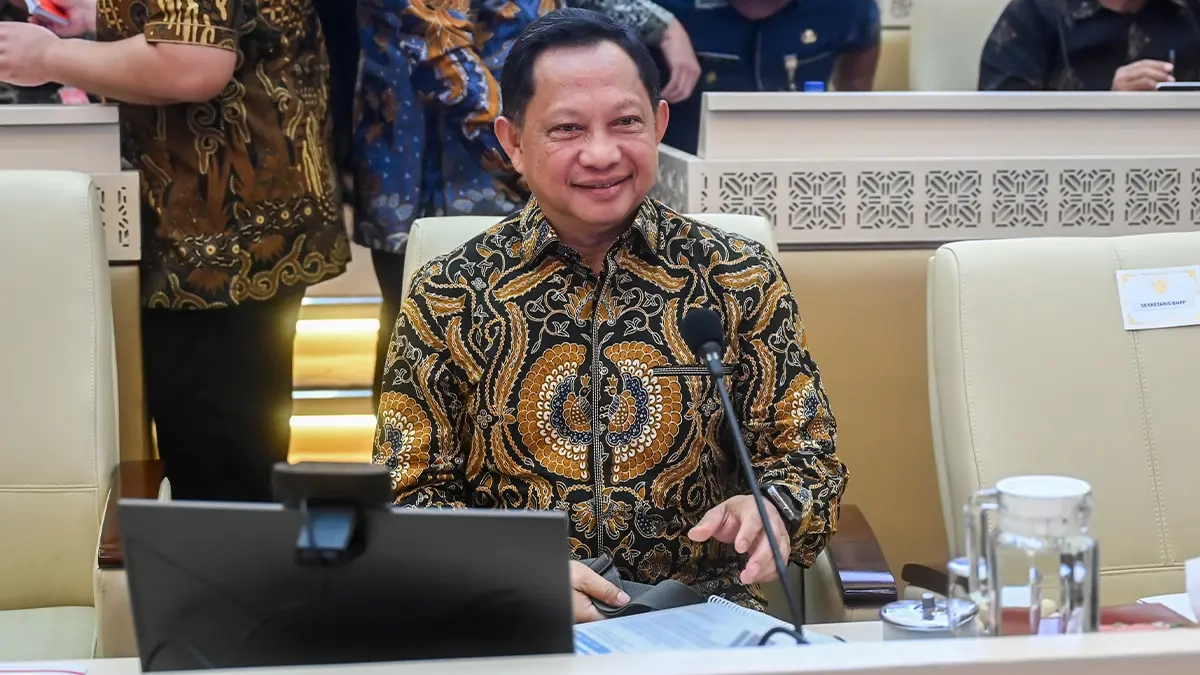
JAKARTA, DDTCNews - Minister of Home Affairs, Tito Karnavian, has stated that the revision of Gov. Reg. 69/2010 concerning procedures for the granting and utilisation of incentives for the collection of local taxes and user charges will prioritise the granting of incentives based on local government performance.
Tito stated that incentives are needed to motivate local governments to increase local own-source revenue (pendapatan asli daerah/PAD in Indonesian). However, their granting must be based on performance assessments; thus, only regions satisfying certain indicators are entitled to receive incentives.
"Where PAD is concerned, our recommendation is that performance also be taken into account and considered," he said at a joint meeting with Commission II of the House of Representatives (Dewan Perwakilan Rakyat/DPR in Indonesian), as quoted on Tuesday (4/8/2026).
Tito noted that local government performance can be measured using a number of indicators, whether those drawn up by the Ministry of Home Affairs or by other agencies such as Indonesia's National Government Internal Auditor (Badan Pengawasan Keuangan dan Pembangunan/BPKP in Indonesian). Local governments that fulfil those indicators may receive incentives as a form of recognition.
He explained that incentives for the collection of local taxes and user charges need to be granted to increase PAD to enable local governments to have adequate fiscal space to fund public services.
"Once PAD rises, the local government budget (anggaran penerimaan dan belanja daerah/APBD in Indonesian) automatically increases for the benefit of the public. This is a win-win [solution]," he said.
At the same meeting, Commission II of the House called on the Ministry of Home Affairs to coordinate with the Ministry of Finance (MoF) to evaluate and revise Gov. Reg. 69/2010. According to Commission II Chairperson, Muhammad Rifqinizamy Karsayuda, the revision is necessary to achieve a fairer and more proportional incentive system.
Meanwhile, the Secretary General of the Indonesian Association of Deputy Regional Heads (Asosiasi Wakil Kepala Daerah/Aswakada in Indonesian), Selle KS Dalle, expressed hope that the government would promptly follow up on the mandate of Article 104 of Law 1/2022 on Financial Relations between the Central Government and Local Governance (HKPD Law). He argued that the revision of Gov. Reg. 69/2010 may potentially strengthen public services whilst simultaneously increasing PAD.
"If that is followed up, our hope of improving public services whilst also increasing PAD will, God willing, slowly but surely move in that direction," he said.
On another note, Gov. Reg. 69/2010 stipulates that regency/municipal governments may disburse incentives of up to a maximum of 5% of local tax and user charges revenues. For provincial governments, the incentive is set at no more than 3% of local tax and user charges revenues.
Incentives are granted to the implementing agency for the collection of local taxes and user charges. These incentives are paid proportionally to 5 parties.
First, officials and employees of the implementing agency for the collection of local taxes and user charges, according to their respective responsibilities. Second, the regional head and deputy regional head as the persons in charge of local financial management.
Third, the regional secretary as the coordinator of local financial management. Fourth, land and building tax (L&B Tax) collection agents at the village/subdistrict and district level, village/subdistrict heads or other designations and districts and other personnel assigned by the implementing agency for the collection of taxes.
Fifth, other parties assisting the implementing agency for the collection of local taxes and user charges. (dik)