



Relative Effect of International Agreement in Tax Treaties
JAKARTA, DDTCNews - The relative effect of international agreements is one of the fundamental principles of public international law relevant to the application of tax treaties. This principle states that a treaty is essentially binding only on the parties that conclude it.
In Latin, this principle is known as pacta tertiis nec nocent nec prosunt and has been codified in Article 34 of the Vienna Convention on the Law of Treaties (VCLT). This means that a third state that is not a contracting state is, in principle, not entitled to claim benefits from that agreement.
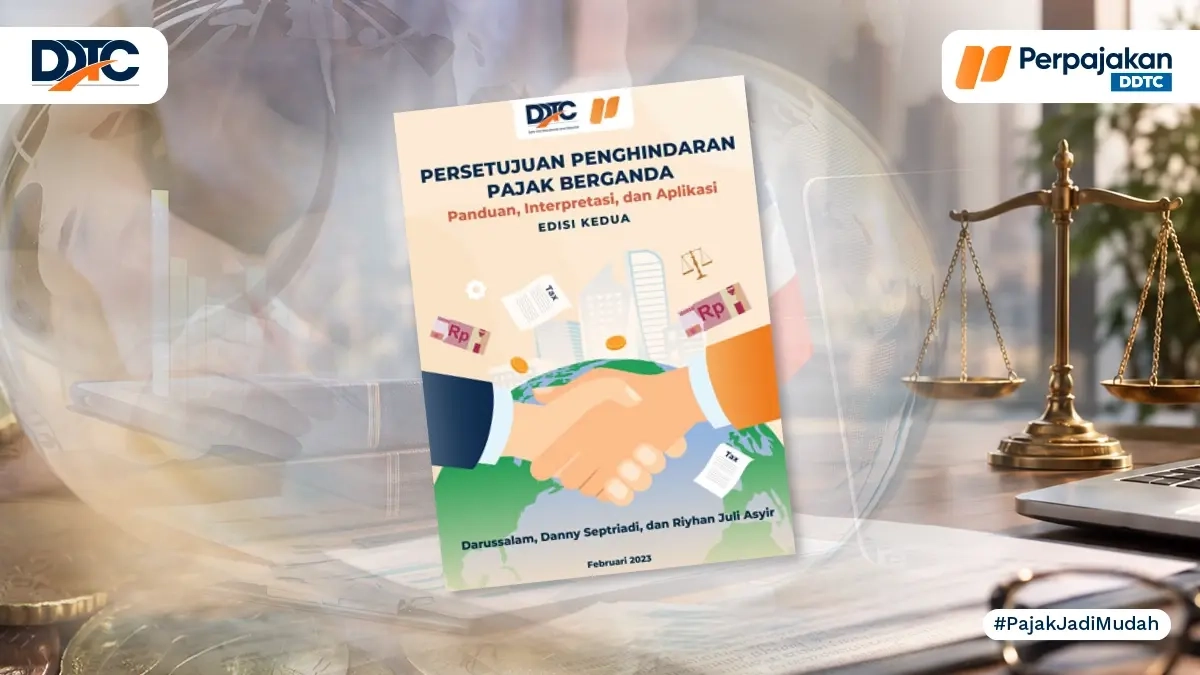
The question is whether this principle of the relative effect of international agreements also applies absolutely to tax treaties. This issue is examined in depth in the book Persetujuan Penghindaran Pajak Berganda: Panduan, Interpretasi, dan Aplikasi (Edisi Kedua).
It turns out that the question concerning this principle does not have a straightforward answer. In the Commerzbank case, also discussed in this book, Judge Mummery J held that the relative effect of international agreements does not apply at all in the context of tax treaties.
Provided that a tax treaty does not contain an Article 1 limiting the scope of its subjects (persons covered), tax residents of a state that is not a contracting state may nonetheless benefit from it. This view is also supported by Klaus Vogel, one of the leading thinkers in international tax law whose works are widely cited across many countries.
Michael Lang has an additional note. In his view, there are other situations in which a tax treaty may in fact be influenced by a tax treaty of another state that is not a party to it, as illustrated in Paragraph 8.2 of the OECD Commentary on Article 4 of the OECD Model.
By way of illustration, Company AB is a dual resident. Company AB is incorporated in State A, but its place of effective management is in State B. State A has entered into a tax treaty with State B and State C, but State B and State C are not bound by a tax treaty with each other.
When Company C pays a dividend to Company AB, the tie-breaker rule in the tax treaty between State A and State B in fact also determines the withholding tax rate on the dividend income received by Company AB from Company C.
Yet State C is not a party to that tax treaty. This situation is referred to as an exception to the application of the relative effect of international treaties in tax treaties.
Criticism of the OECD Commentary Interpretation
Interestingly, this interpretation of the OECD Commentary has not been immune to criticism. Lang, together with Richard Vann, has questioned the legal validity of that argument, particularly with regard to its consistency with the original intent of the second sentence of Article 4 paragraph (1) of the OECD Model and the characteristics of the taxation of passive income associated with a permanent establishment (PE).
As such, what are the reasons behind Lang and Vann's criticism of the OECD Commentary interpretation? And how does the OECD respond to the question of the applicability of the relative effect of international treaties to tax treaties?
Find the complete answers in the Second Edition of the Tax Treaty book authored by Darussalam, Danny Septriadi and Riyhan Juli Asyir. The issue of the relative effect of international treaties is discussed comprehensively in Chapter 5 on Tax Subjects Covered by Tax Treaties, complete with case illustrations and references to international jurisprudence that enrich the reader's understanding.
Comprising 27 chapters, this book examines the guidance, interpretation and application of tax treaties in a comprehensive and systematic manner, covering everything from the basic concepts of international taxation and the development of tax treaty models to a provision-by-provision interpretation.
Each discussion is also supplemented with the latest developments surrounding tax treaties and Base Erosion and Profit Shifting (BEPS) issues.
Interested in adding a tax treaty reference to your bookshelf? The Tax Treaty and SDSN English-Language Reference Package is now also available, combining this book with the English-Language Edition of the SDSN containing the latest translations of the Income Tax Law and the General Tax Provisions Law.
The book package can be ordered via store.perpajakan.ddtc.co.id and delivery charges for this book package are waived. Have a question about this book? Contact the Perpajakan DDTC WhatsApp Hotline at 0813-8080-4136 (Siska). (rig)