



MoF Holds Public Consultation on Tax Court Presidential Regulation
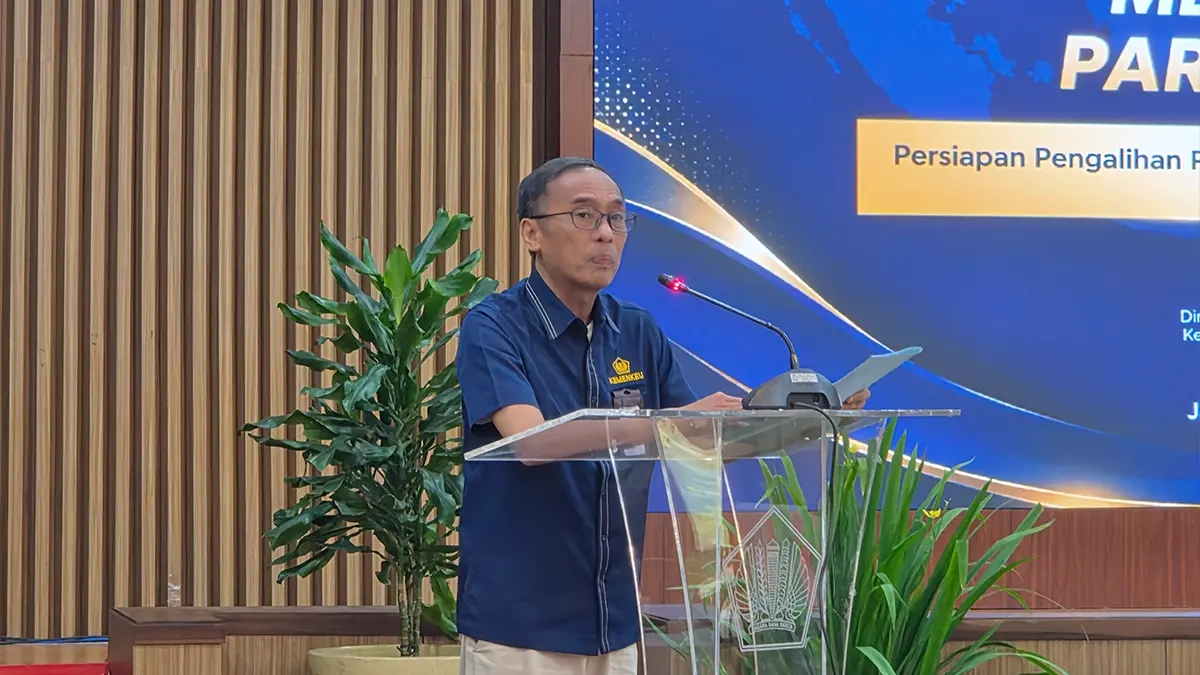
JAKARTA, DDTCNews - The Ministry of Finance (MoF) has held a public consultation on the Draft Presidential Regulation (Pres. Reg.) concerning the Transfer of Organisational, Administrative and Financial Guidance of the Tax Court from the MoF to the Supreme Court.
The drafting of the presidential regulation was undertaken to follow up on the unification of the Tax Court under the Supreme Court pursuant to Constitutional Court Decision Number 26/PUU-XXI/2023.
"It would be ideal if we conducted meaningful participation, whereby stakeholders gather and provide input on the concept and design we have prepared," said Bismar Fahlerie, Deputy Secretary of the Tax Court, on Wednesday (23/9/2026).
Bismar stated that there are 2 principles underpinning the transfer of authority over the organisational, administrative and financial guidance of the Tax Court from the MoF to the Supreme Court, namely soft landing and hold harmless.
Under the soft landing principle, the transition of the Tax Court from a dual-roof system to a single-roof system is targeted to proceed without disrupting the provision of services to the disputing parties at the Tax Court.
"The second principle we are applying is hold harmless. This is also crucial. When this transformation and transfer takes place, no party should be disadvantaged, whether those seeking justice or the officials involved," said Bismar.
Meanwhile, Substitute Registrar of the Tax Court Secretariat, Aditya Agung Priyo Nugroho, noted that the drafting of the presidential regulation concerning the unification of the Tax Court under a single roof has been coordinated with the Supreme Court to identify various issues in the transitional process.
He noted that such coordination is necessary given that the Tax Court has its own procedural law, business processes and human resource management arrangements that differ from those of other courts under the Supreme Court.
In general, the draft presidential regulation prepared by the government covers several matters. First, the target timeline for the transfer of the Tax Court from the MoF to the Supreme Court. Second, the status and financial entitlements of Tax Court judges.
Third, human resource restructuring. Fourth, the transfer of assets and administration. Fifth, governance and finance. Sixth, transitional provisions. The organisational, administrative and financial guidance of the Tax Court is to be transferred to the Supreme Court no later than 31 December 2026.
Tax Court judges will transition to the status of Supreme Court judges, whilst employees of the Tax Court Secretariat will retain their status as MoF employees seconded to the Supreme Court for a specified period.
Tax Court assets, including intangible assets such as IT systems, will also be transferred to the Supreme Court. Nevertheless, the MoF will continue to provide IT support to ensure the smooth operation of the e-tax court system.
In the transitional provisions, it is affirmed that the handling of tax disputes at the Tax Court will continue to be conducted with reference to the Tax Court Law until such time as that law is revised.
"With regard to the minister of finance regulation on attorneys and the organisational structure of the Tax Court under Presidential Decree 83/2003, these remain in use at present until the Supreme Court makes amendments," said Aditya.
The draft presidential regulation on the unification under a single roof is planned to be enacted as a presidential regulation in October 2026. (rig)