



Why Tax Education Pathways for Tax Attorneys Matter
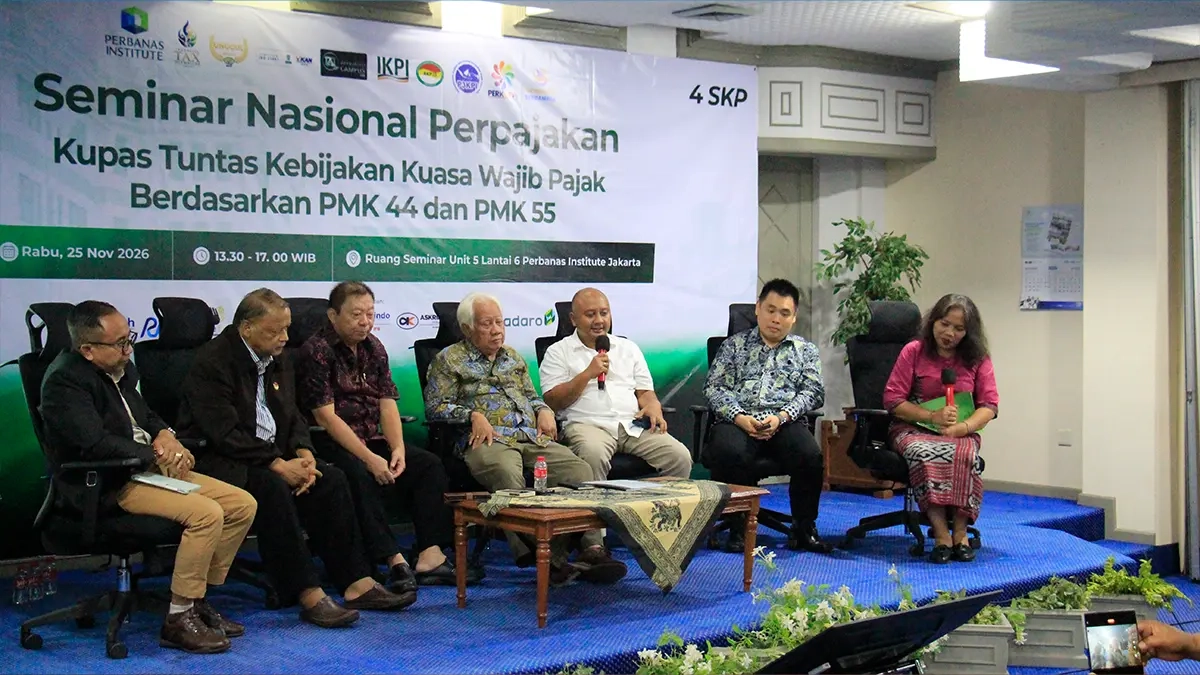
JAKARTA, DDTCNews - The tax education pathway at universities is considered necessary to remain one of the routes to becoming a tax attorney, amidst the restructuring of the profession that now increasingly relies on competency examination mechanisms.
Bawono Kristiaji, Special Staff for Tax Policy at the Association of All Indonesian Tax Centers and Tax Academicians (Perkumpulan Tax Center dan Akademisi Pajak Seluruh Indonesia/PERTAPSI in Indonesian), stated that if the development of taxpayer representative competency relies too heavily on competency examinations, tax apprenticeship risks becoming pragmatic.
He is concerned that people will focus solely on passing examinations, rather than on efforts to understand tax knowledge comprehensively through the educational process.
"When times and technology make things increasingly easier, without the critical thinking that ought to be cultivated at universities, tax becomes a pragmatic academic discipline. This is something we genuinely fear as well," he said at the Seminar Kupas Tuntas Kebijakan Kuasa Wajib Pajak Berdasarkan PMK 44 dan PMK 55 hosted by Perbanas Institute on Wednesday (25/11/2026).
Bawono, who also serves as Senior Partner of DDTC Fiscal Research & Advisory (FRA), noted that the restructuring of the taxpayer representative profession through MoF Reg. 44/2026 and MoF Reg. 55/2026 should not be oriented solely towards competency examination mechanisms.
In his view, education at the university level, particularly in taxation, tax accounting and fiscal administration programmes, needs to be given greater space.
"The elucidation to Article 32 paragraph (3a) of the General Provisions and Tax Procedures (GPTP) Law sets out three criteria for obtaining authorisation from a taxpayer, namely educational background, certification and guidance by an association. In MoF Reg. 44/2026 and MoF Reg. 55/2026, the government has chosen to narrow the entry route [as a tax attorney] by basing it on certification," he explained.
Bawono also considers that professional competency in taxation as well as an individual's character and disposition, is in fact shaped through a graduated process, one that can begin from the moment a person undertakes tax education.
As such, maintaining the quality of the profession does not necessarily mean filtering prospective practitioners as strictly as possible. Individuals who already possess basic tax competency, whether through education or certification, should still be granted access to become tax attorneys.
Thereafter, Bawono continued, the quality of their professional practice can also be maintained through supervision and continuous competency development. Such efforts need to be carried out by the government, professional organisations and universities that provide tax education.
"There is a view from the Chairperson of PERTAPSI and DDTC Founder Darussalam: how do we first bring them into the system, and then carry out better guidance and development by the Tax Consultant Professionalism Enhancement Committee (Panitia Penguatan Profesionalisme Konsultan Pajak/PPPK in Indonesian) working in tandem with the tax consultant associations," he elaborated.
Further, Bawono highlighted the tax competencies required to represent taxpayers at the tax court. As the year draws to a close, Indonesia is preparing for the unification of the tax court under the Supreme Court (Mahkamah Agung/MA in Indonesian).
In his view, the requirements for becoming a legal representative at the tax court must be aligned with the requirements for the tax attorney and tax consultant professions.
These requirements encompass three aspects, namely basic tax competency, tax expertise competency and continuing tax competency.
Bawono emphasised that the momentum of unifying the tax court under the Supreme Court must not be used to narrow the access that has hitherto been open to non-advocate tax professionals, namely tax practitioners who do not hold advocate status.
"In the technical regulations governing tax attorneys, there is no qualification based on certification. It is more a matter of tax course/training certificates, educational background in taxation and so forth. The question is whether, going forward, we as consultants will be able to serve as tax attorneys at the tax court [once it is under the Supreme Court]," he said.
Bawono believes the government must align competency standards whilst also revisiting the restrictions on the routes to becoming a tax attorney under MoF Reg. 44/2026 and MoF Reg. 55/2026, as well as the new legal framework governing the tax court going forward.
"This unification represents a momentum to harmonise and ensure coherence regarding who may represent taxpayers, whether at the non-appeal, appeal, objection and subsequent stages. This remains further work to be done," he added.
Recommended Entry Routes to Becoming a Tax Attorney
Further, Bawono proposed at least 3 routes that may be taken to become a tax attorney. First, the education route for university graduates who possess basic tax competency.
Second, the equivalence or certification route for graduates from other fields or university graduates who do not yet fulfil the standard, through a tax attorney professional education programme.
Third, the recognition route for individuals whose expertise is already proven, for instance, former employees and retired tax authority officials, practitioners, researchers and academics. This route applies to individuals who fulfil certain qualifications, length of service and/or experience.
"As in many countries, recognition can still provide a pathway to becoming a tax attorney. All of this has been summarised in our book titled Kuasa dan Konsultan Pajak: Model dan Perbandingan, published in 2024, and Dari Penyatuan Atap Menuju Kesatuan Hukum Pajak: Memperkuat Spesialisasi dan Konsistensi Putusan Melalui Kamar Pajak di MA published in 2026," said Bawono. (rig)