



Ahead of Unification, Tax Court Procedural Law to Be Updated
JAKARTA, DDTCNews - The unification of the tax court from the Ministry of Finance (MoF) under the Supreme Court (Mahkamah Agung/MA in Indonesian) will be followed up with improvements to procedural law.
Chief Justice of the Tax Court Triyono Martanto said the update to procedural law is one of the mandates of the Constitutional Court (Mahkamah Konstitusi/MK in Indonesian) contained in Constitutional Court Decision Number 26/PUU-XXI/2023.
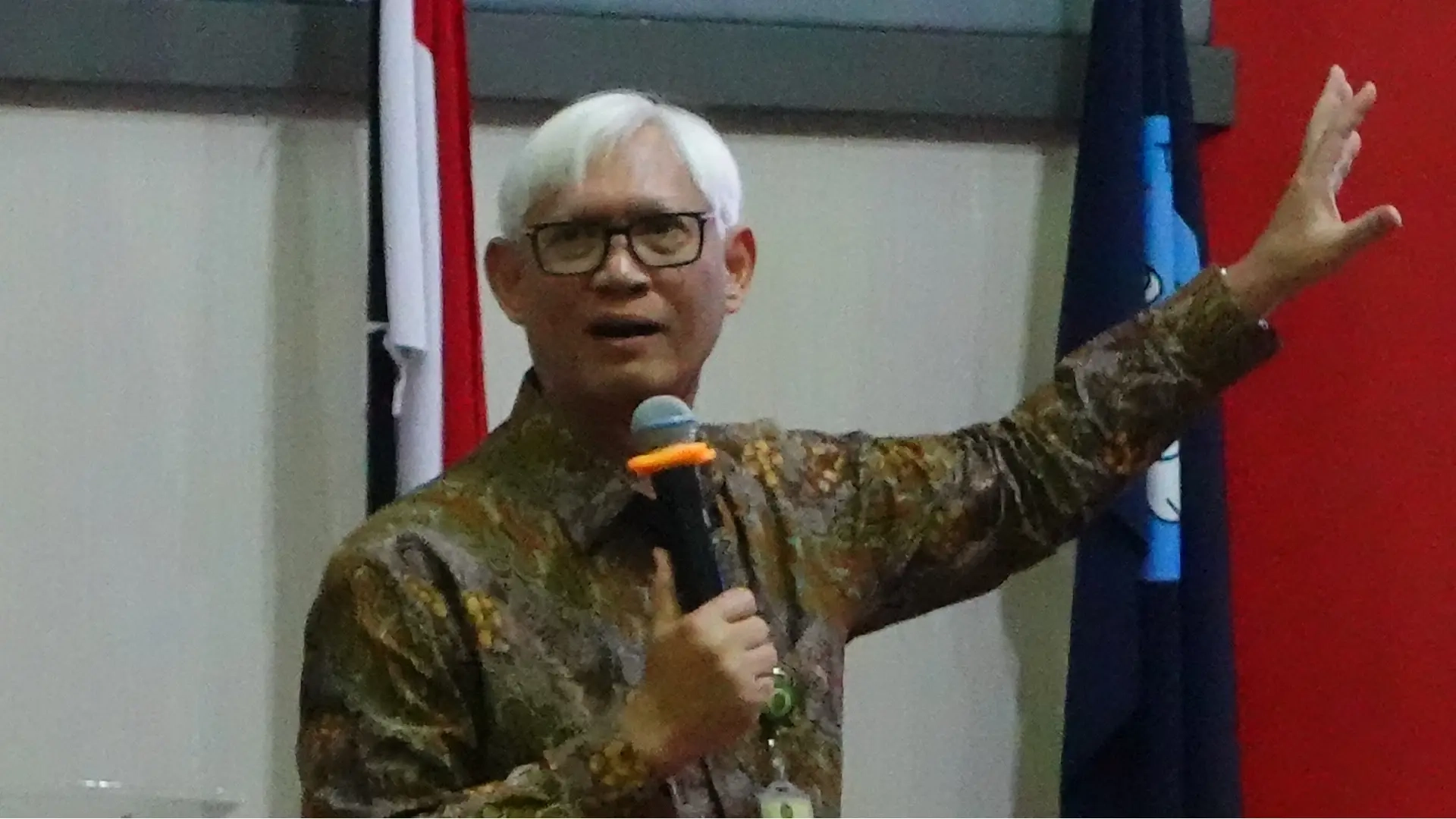
"According to the mandate of Decision Number 26/PUU-XXI/2023, the procedural law of the tax court must also be refined. There will be what is known as Volume Two of the Tax Court, which governs matters relating to judicial administration and technical proceedings," said Triyono at a public lecture entitled Menyongsong Penyatuan Atap Pengadilan Pajak dari Kemenkeu ke MA pada 2027 organised by the Faculty of Administrative Sciences (FIA) of the University of Indonesia (UI), Wednesday (25/11/2026).
According to Triyono, there are various new clauses proposed for inclusion in the revised procedural law. One proposal put forward in the draft procedural law of the tax court concerns simplified disputes for low-value cases.
"There are disputes involving amounts as low as IDR1 million. For minor cases like these, we are trying to formulate an approach whereby they can be handled by a single judge with simpler proceedings," said Triyono.
Beyond that, the draft procedural law of the tax court also includes a clause on the consolidation of decisions in similar disputes. Under this approach, disputes involving the same parties, type, tax year and basis of correction will be examined and decided in a single combined file.
"We hope that going forward, the procedural law will allow us to consolidate taxable periods from January through to December into a single decision," said Triyono.
The draft procedural law of the tax court also contains proposals regarding the expansion of jurisdiction. Going forward, the tax court is expected to be able to adjudicate factual acts and review actions taken in the course of a preliminary audit (bukper).
"Tax authorities nowadays do not merely issue decisions. It turns out that factual acts may also be subject to a claim before the tax court. A factual act would be, for instance, where officials are requested to issue a decision but remain silent. The silence of officials can be challenged before the tax court," said Triyono.
For information, Constitutional Court Decision Number 26/PUU-XXI/2023 mandates the transfer of authority over the organisational, administrative and financial guidance of the tax court from the MoF to the Supreme Court. Under that decision, the authority for organisational, administrative and financial guidance must be transferred to the Supreme Court no later than 31 December 2026.
In addition to mandating the unification, the Constitutional Court, through its decision, also called on stakeholders to update the procedural law of the tax court.
"From the time the decision in the a quo case is pronounced, all stakeholders shall gradually and promptly prepare regulations relating to all legal requirements, including procedural law, in the context of enhancing the professionalism of the tax court's human resources and prepare other matters relating to the integration of authority under the Supreme Court," the Constitutional Court decision reads. (dik)