



OECD Urges Higher VAT Rate and Lower Taxable Person Threshold
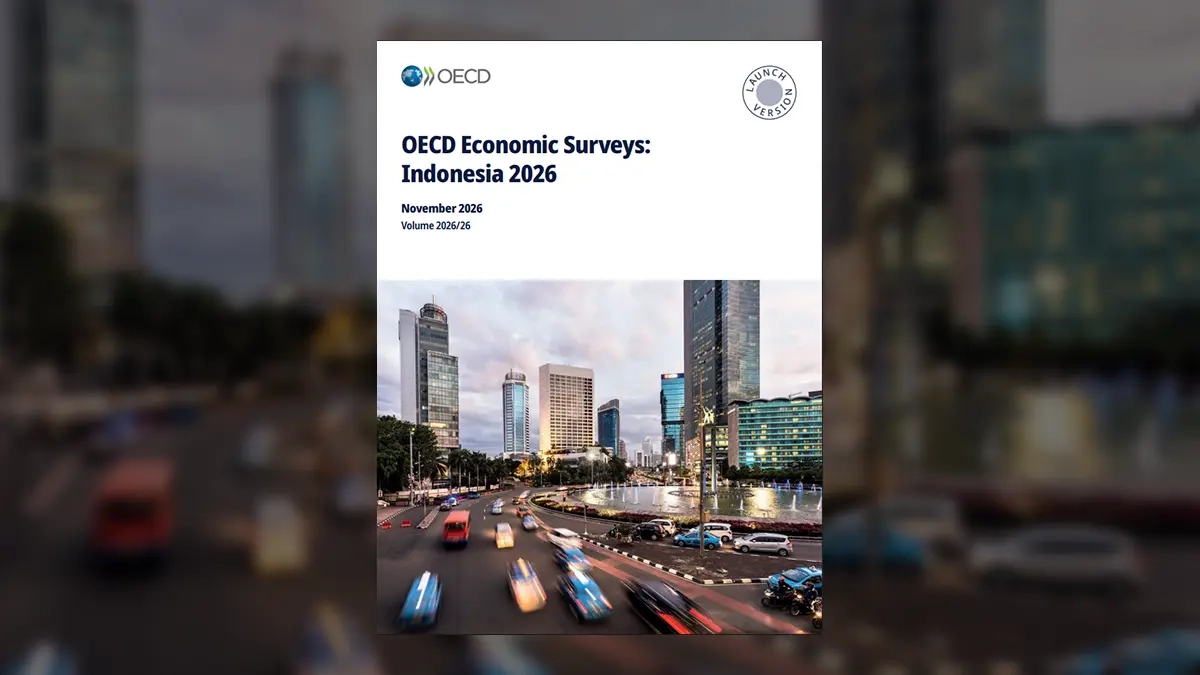
JAKARTA, DDTCNews - The Organisation for Economic Co-operation and Development (OECD) is urging Indonesia to raise its value added tax (VAT) rate whilst reducing VAT exemption facilities and gradually lowering the taxable person (pengusaha kena pajak/PKP in Indonesian) threshold in order to optimise tax revenue.
Referring to the OECD Economic Surveys: Indonesia 2026, the VAT rate currently in force in Indonesia remains lower than the average VAT rate across OECD member countries. In addition, the majority of goods and services are currently subject to VAT using an alternative tax base (dasar pengenaan pajak/DPP in Indonesian) of 11/12 of the transaction value.
"For most non-luxury goods and services, the taxable base was reduced to 11/12 of the transaction value, leaving the effective VAT burden unchanged at 11%. The full 12% effective rate applies mainly to specified luxury goods and services. This leaves room to raise the standard VAT rate over time to durably mobilise revenue," the OECD stated on Friday (27/11/2026).
The OECD also takes the view that the taxable person threshold, currently set at IDR4.8 billion per year, needs to be gradually reduced in line with international standards. According to the OECD, the taxable person threshold applicable in Indonesia is considerably higher than the thresholds applied in OECD member countries.
The OECD acknowledges that a high taxable person threshold can reduce administrative complexity. However, such a high threshold narrows the tax base and discourages business operators from expanding their activities.
"Gradually aligning the VAT threshold with international practice, while easing the transition of growing firms into the standard tax system through simplified compliance and stronger enforcement, would reduce distortions and raise revenue," the OECD explained.
Regarding VAT exemptions, the OECD is urging Indonesia to reduce the scope of taxable goods (barang kena pajak/BKP in Indonesian) and taxable services (jasa kena pajak/JKP in Indonesian) that benefit from such facilities. According to the OECD, VAT exemptions are not an instrument capable of delivering targeted fiscal support to those in need.
"VAT exemptions are a relatively imprecise instrument for redistribution, as benefits also accrue to middle- and high-income households that consume more of these goods and services in absolute term," the OECD wrote.
VAT exemptions also weaken the VAT system, as input VAT associated with supplies of taxable goods and taxable services that are exempt from VAT cannot be credited by the taxable person. Non-creditable input VAT increases production costs and gives rise to a cascading effect.
"Indonesia could consider moving gradually from broad exemptions towards a narrower reduced-rate regime for clearly defined basic goods and essential services," the OECD wrote.
The OECD believes this step will reduce revenue leakage and improve VAT neutrality.
On the compliance side, the OECD noted that Indonesian taxpayer compliance in collecting and remitting VAT remains very low. This is reflected in Indonesia's VAT revenue, which has reached only 54% of its potential.
The OECD takes the view that improvements in VAT compliance need to be accompanied by policy reform through lowering the taxable person threshold, reducing VAT exemption facilities and increasing the rate.
The combination of both measures is estimated to generate additional tax revenue equivalent to 2.2% of gross domestic product (GDP). (rig)