



Tax Law and the Birth of Modern Pharmacy
In 18th-century England, the high fees charged by physicians forced ordinary people and even those at the royal court to rely entirely on popular self-medication remedies.
Anyone could suddenly turn into a 'medicine seller' and trade remedies freely. Ironically, behind claims of curing everything from cancer to cholera, these medicines contained nothing more than useless concoctions or harmful toxic substances.
At the same time, the Crown was experiencing a financial crisis in the aftermath of the American War of Independence. Rather than banning or regulating the circulation of these remedies, the government decided instead to place a tax label on every bottle of self-medication.
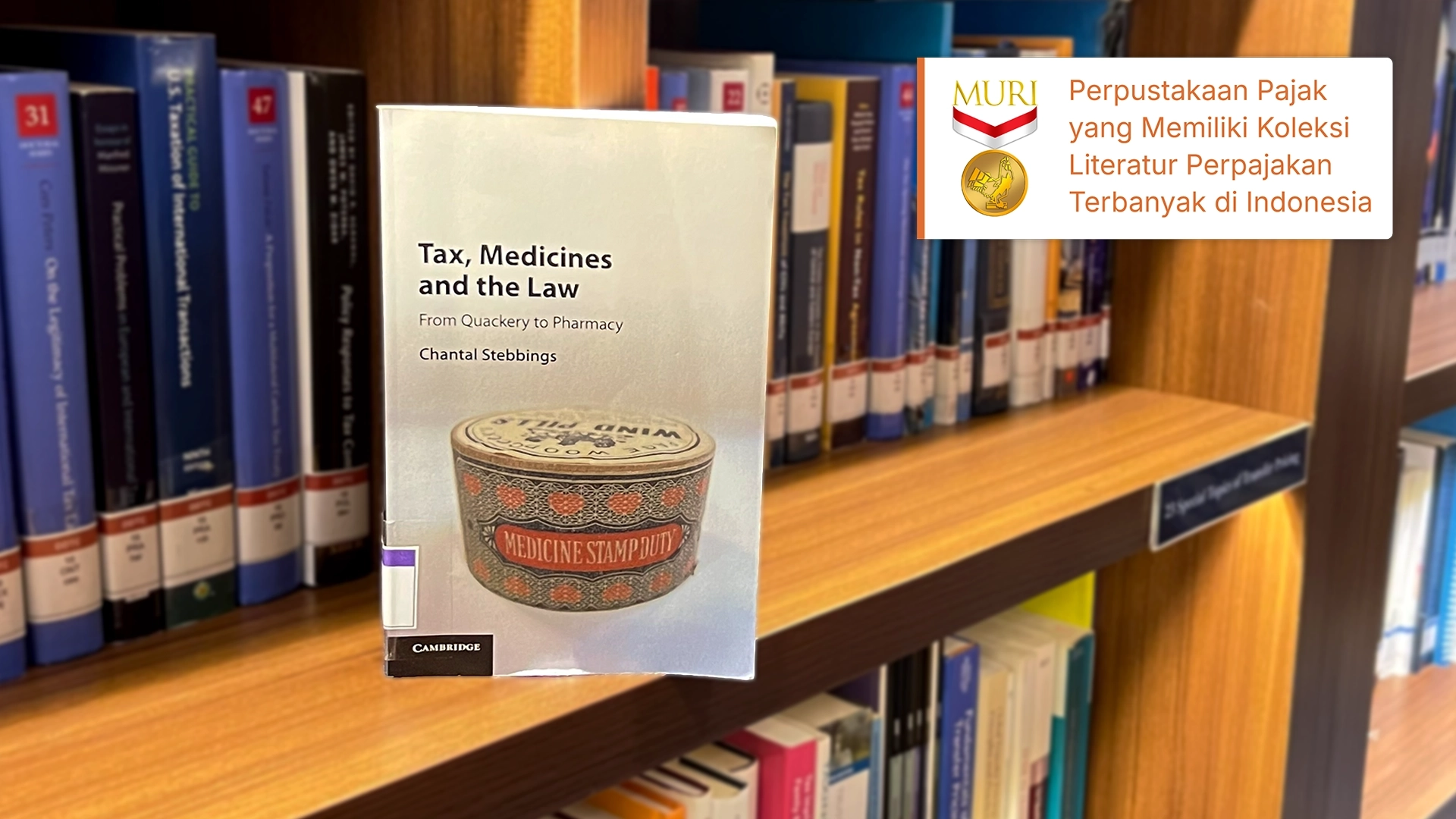
Chantal Stebbings, through her book entitled Tax, Medicines and the Law: From Quackery to Pharmacy, uncovers a historical narrative of public health in the land of the Three Lions.
Published in 2017, the book demonstrates that the institutionalisation of the modern pharmacist profession and medicines quality supervision in England was not the result of planned policy design, but rather an experiment.
The birth of modern pharmacy originated from a commodity tax law that endured for 158 years, namely stamp duty since 1783.
Citing Joseph Schumpeter (1918), tax law is viewed as the clearest prism through which to dissect the soul, priorities of power and shifting values of a nation. When a state confronts the trade in commodities that risk poisoning its citizens, two policy instrument options exist: prohibition or taxation.
Across the channel, the French Crown chose the path of formal regulation. Through a medical commission established in 1728, the government required every self-medication seller to submit formula samples for scientific testing in royal laboratories.
Medicines proven safe and efficacious were granted limited marketing authorisation, whilst those deemed dangerous were strictly prohibited under threat of legal sanction. In practice, however, France's centralised oversight system collapsed. Smuggling became rife, bribery flowed freely and desperate French citizens continued to purchase remedies illegally.
Observing France's failure, England introduced the Medicine Stamp Act 1783 in May 1783. The original design of the law targeted sellers of self-medication remedies. Anyone selling medicines without certification from a physician or apothecary was required to purchase an annual licence for 20 shillings and pay a proportional stamp duty based on the selling price of each medicine bottle.
However, the regulation failed completely. Revenue collected amounted to only approximately 13% of the target, as sellers easily evaded it by claiming to be assistants to licensed compounders.
Subsequently, in 1785, the law was revised through the Medicine Stamp Act 1785, shifting the object of taxation directly onto the physical form of the medicine commodity itself.
This measure succeeded in dramatically increasing revenue and stands as evidence of the driving force behind the emergence of England's first medicines oversight regime. Nevertheless, the government's decision to collect tax by affixing a stamp ribbon over the cap of each bottle or medicine box gave rise to the greatest irony in the history of consumer protection.
The Misleading Royal Stamp and Unintended Transparency
The stamp was officially printed by the Royal Stamp Office, bearing an engraving of the British monarchy's coat of arms and a security ribbon that tore when the medicine packaging was opened.
The original intention was to create an economic disincentive: the tax would multiply the price, causing consumers to think twice before purchasing. Yet the opposite occurred. Ordinary people with limited literacy did not understand that the stamp was merely proof of payment of an obligation to the state treasury.
Upon seeing the lion and crown emblem affixed to a bottle of Dr. Collis Browne's Chlorodyne or Bateman's Drops, the public believed the stamp to be an official quality assurance certificate directly from the King of England.
The state's intention of collecting tax had unwittingly conferred a cloak of moral legitimacy and quasi-scientific endorsement upon concoctions laden with toxins and addictive substances.
Yet the law of history always operates through unexpected dialectics. The Medicine Stamp Act 1785 surprisingly became the cornerstone of formula transparency in modern civilisation.
The law sought to ensure that standard medicinal preparations compounded by orthodox medical practitioners were not subjected to the tax burden.
To that end, its design provided statutory exemptions. The most historically significant exemption was granted to compound preparations that were known, admitted and approved remedies.
For a medicinal product to benefit from an exemption, the law prescribed three strict cumulative conditions.
First, the seller must hold the status of a qualified medical practitioner or a qualified chemist and druggist.
Second, the preparation must not be kept secret in any way; rather, its composition must have been published transparently in standard formula books open to the public.
Third, the seller was strictly prohibited from claiming exclusive copyright over the formula or promoting it with bombastic testimonials as a personal miracle cure.
These exemption facilities immediately triggered a race to disclose trade secrets. Medicine manufacturers and pharmacy proprietors flocked to reveal their secret formulae and register them in official prescription books.
Advances in analytical chemistry in the early 19th century were harnessed no longer to adulterate concoctions, but to demonstrate that the active materials within medicines had been transparently tested.
The desire to save on costs drove the medicines industry to transform from the secretive tradition of quackery towards an era of accountable and transparent scientific pharmacy.
From Medicine Seller to the Modern Pharmacist Profession
Through this book, Stebbings sets out an analysis of the unexpected role of tax law in midwifing the birth of the modern pharmacist profession.
In the 18th century, the pharmacist profession as a respected vocation in its present form had not yet taken shape. England's healthcare landscape experienced a significant void when medicine sellers transitioned into general practitioners.
The business gap in compounding and supplying daily medicines for the lower classes was then filled by two groups: manufacturers of processed chemical materials (chemists) and wholesalers and retailers of raw herbal materials (druggists).
Society and educated medical circles looked down upon these groups as ordinary shopkeepers, on a par with coffeehouse owners, candle sellers, or tobacconists.
The interaction between these growing medicine-compounding groups and the Medicine Stamp Act 1785 triggered a highly complex dynamic of competing interests.
The threat of fines of between 10 and 20 pounds sterling per violation, an amount capable of bankrupting a small shop in an instant, became a daily source of terror for medicine compounders.
Because the wording of the 1785 law was exceedingly vague and open to multiple interpretations, unscrupulous enforcement officers readily entrapped apothecaries who forgot to tear the stamp or sold a cough remedy without a ribbon.
It was precisely this climate of terror that served as the adhesive for social solidarity. Medicine compounders in London and various industrial towns began to advocate and establish organisations for collective representation.
In 1841, they founded The Pharmaceutical Society of Great Britain. Through its official publication, the Pharmaceutical Journal, the organisation regularly examined the interpretation of tax law whilst championing a formal pharmacy education curriculum.
Thus, it was the sense of threat from the tax authority that compelled the 'medicine-selling' shopkeepers to transform into an organised professional corps.
The Collapse of Tax Law
Entering the 20th century, the Medicine Stamp Act 1785 faced an explosion of the modern pharmaceutical industry based on mass manufacturing, strip-packaged tablets, and purely laboratory-synthesised medicines.
Rather than revising it through Parliament, England's tax bureaucracy took a shortcut. Officials issued their own guidelines, internal instructions, and policies beyond the mandate of the law.
This patchwork practice plainly violated the principle of the rule of law enshrined in Magna Carta and the Bill of Rights 1689. This phenomenon illustrates what Stebbings terms the isolation of tax law.
Tax law was left to operate in its own world, disregarding doctrines of human rights protection and the propriety of common law, solely because the government required a steady flow of funds.
The collapse of the stamp duty law became inevitable once the courts began to reject this bureaucratic arbitrariness.
The ruling in the dispute Farmer v. Glyn-Jones (1903) confirmed that a pharmacist selling medicines listed in official standard formula books was entitled to tax exemption facilities, triggering panic among the tax authority.
Modern pharmaceutical corporations began exploiting loopholes in the archaic wording of the law to lawfully free themselves from stamp duty.
By the 1930s, the medicines stamp duty law had become a legal farce, riddled with technical chaos and enforcement costs far exceeding the revenue collected.
Finally, amidst the Second World War, Parliament enacted the Pharmacy and Medicines Act 1941. This law abolished medicines stamp duty permanently.
The state consciously brought the commodity taxation experiment to an end, replacing it with a modern regime: the protection of public health was handed entirely to medical authorities through prescription-based regulation of potent medicines and the statutory obligation to disclose the formula of active materials on every package.
Stebbings' work offers more than a mere memorabilia of 18th- and 19th-century English legal history. The book provides a highly valuable classic case study for contemporary taxation and public health policymakers in the modern era.
The book demonstrates that taxation never operates in a vacuum.
Behind stamp sheets and forms lie the complex ties between the struggle to fill the state treasury, the dynamics of medical professional ethics and humanity's long endeavour to find the boundary between the miracle of healing and genuine science.
Interested in reading this book? Please visit DDTC Library.
To date, DDTC Library holds a total of 5,096 literature collections supporting the study of taxation as a multidisciplinary field and has achieved a MURI record as the Tax Library with the Largest Collection in Indonesia.
Before visiting DDTC Library, the public may first confirm via the hotline: +62-21-2938-2700 or email: [email protected]. Visit the DDTC Library Instagram account for the latest information relating to tax literature. (dik)