



Supreme Court Pushes Tax Court Decentralisation and Cassation
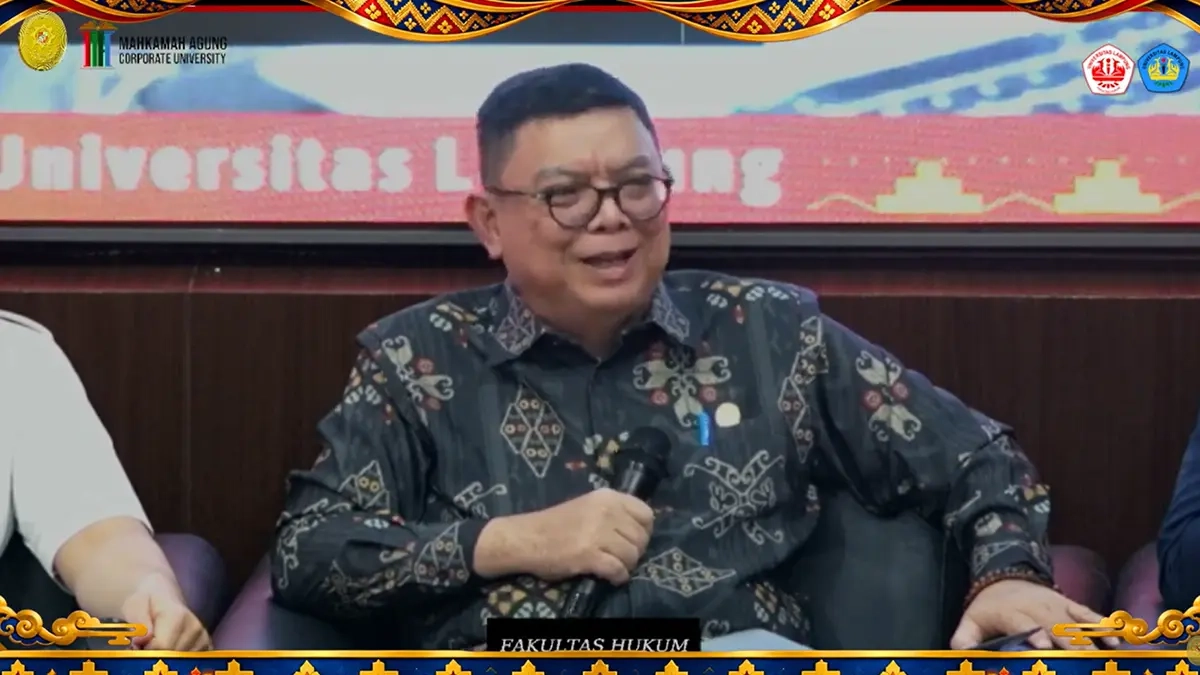
JAKARTA, DDTCNews - The Supreme Court (Mahkamah Agung/MA in Indonesian) is pushing for the decentralisation of the Tax Court through the establishment of regional tax courts or integration into the state administrative court (tata usaha negara/TUN in Indonesian) system.
Supreme Court Justice of the TUN Chamber, Yodi Martono Wahyunadi, said that decentralisation of the Tax Court is necessary to strengthen access to justice and to support the one-roof system.
"Why is court decentralisation necessary? It is to realise access to justice and to strengthen the one-roof system. It is also for case efficiency," he said at a public consultation on the drafting of tax policy recommendations entitled Tax Court Decentralisation: Towards an Independent and Accessible Court, Wednesday (4/11/2026).
According to Yodi, tax cases are currently handled in a centralised manner by the Tax Court located in Jakarta. Tax court decisions are final and have permanent legal force, with no cassation remedy available.
As a result, many tax court decisions are subject to civil review (peninjauan kembali/PK in Indonesian) applications to the Supreme Court without going through the cassation stage as a filter. This situation has also increased the burden of handling tax civil review cases at the Supreme Court.
Reflecting on this situation, the Supreme Court is pushing for the decentralisation of the Tax Court, with an avenue for parties to file a cassation appeal against decisions in tax cases.
"In my view, there needs to be a cassation remedy, so decisions do not immediately acquire inkracht status. Tax cases should be decided at the Supreme Court through the ordinary legal remedy first, then cassation. We need to think about how to make this effective," said Yodi.
If decentralisation is pursued through the establishment of regional tax courts, the Supreme Court will need to set up new judicial institutions in several regions. According to Yodi, this may be conducted in stages, taking into account budget availability.
If decentralisation of the Tax Court is pursued through integration into the regional TUN high courts, tax cases will be handled by a specialist tax chamber within the TUN high court.
"The first model is as an independent institution, where the tax court continues to exist but its structure is divided across several regions. In the second model, the tax court merges into the TUN high courts in the regions," said Yodi.
According to Yodi, the advantage of decentralisation through the establishment of regional tax courts is the preservation of judicial specialisation in taxation. However, this option is seen as requiring significant funding.
Conversely, the integration of the Tax Court into the TUN high courts is deemed more efficient because the Supreme Court would not need to construct new buildings in the regions. However, this option risks reducing technical specialisation in tax matters and adding to the caseload within the TUN court system.
For information, the issue of tax judicial proceedings is also one of the topics covered in DDTC's latest book entitled Dari Penyatuan Atap Menuju Kesatuan Hukum Pajak: Memperkuat Spesialisasi dan Konsistensi Putusan Melalui Kamar Pajak di Mahkamah Agung.
This book is penned by DDTC Founders, Darussalam and Danny Septriadi. The 44th book published by DDTC comprises 10 chapters and examines various issues relating to the transfer of guidance of the Tax Court from the Ministry of Finance (MoF) to the Supreme Court.
One of the issues addressed is the implications of the Tax Court's integration under the Supreme Court's one-roof system. The discussion covers, among others, the possibility of changes to trial practice and procedural law of the Tax Court after all guidance authority has been transferred to the Supreme Court.
In addition, the book presents the practice of tax court administration in a number of countries. This discussion may serve as comparative materials in examining the administration of the Tax Court in Indonesia after it falls fully under the guidance of the Supreme Court.
The book also examines the journey and challenges towards the one-roof system of the Tax Court under the Supreme Court as well as the importance of implementing a chamber system at the Supreme Court, particularly for tax cases.
Other discussions cover the urgency of enhancing the specialisation of tax judges to deliver fair, high-quality and consistent decisions.
The book also highlights the importance of achieving predictability in tax law to enable identifiable and reliable directions of legal application by taxpayers and practitioners alike. (rig)