



Director General of Taxes: Indonesia‘s Tax System Needs Simplification
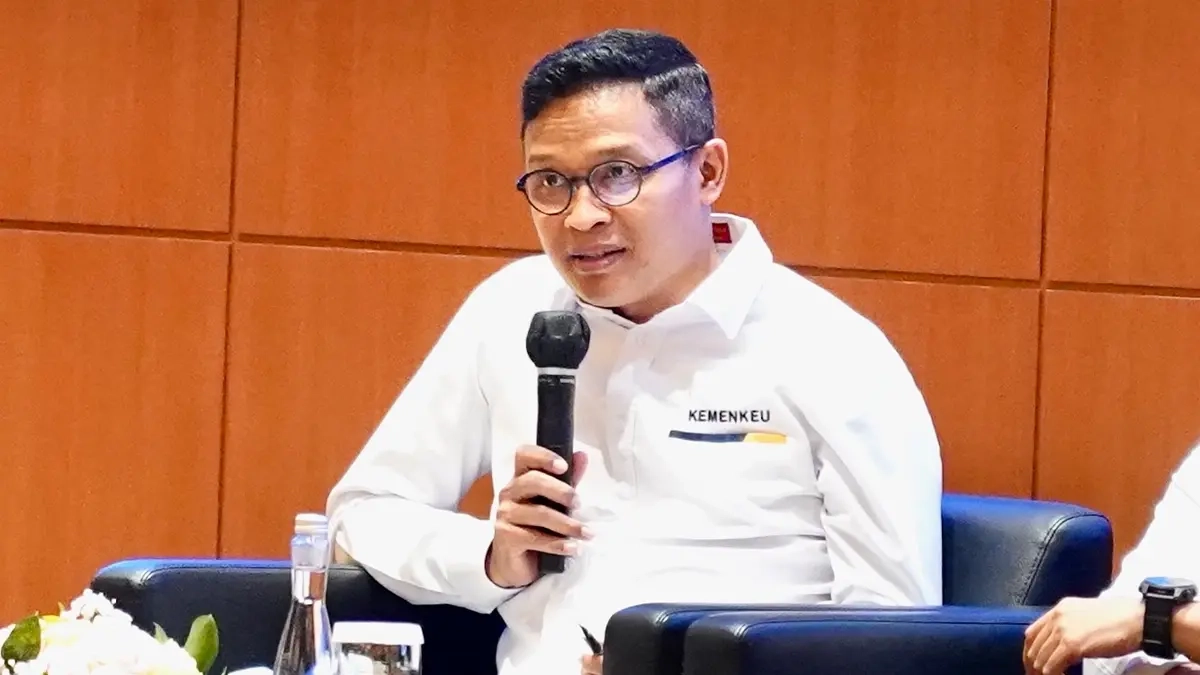
JAKARTA, DDTCNews - The Directorate General of Taxes (DGT) acknowledges that Indonesia's tax system needs to be continually simplified to facilitate all taxpayers in understanding and complying with such a system.
Director General of Taxes Bimo, Wijayanto, said that the effort to simplify the tax system also aims to deliver fairness and legal certainty. To that end, the DGT cannot focus solely on collecting state revenue.
"As the tax revenue collection authority, the DGT must continually strive to build a tax system that is fairer, provides legal certainty and is increasingly simple to understand," he said, as quoted on Friday (30/10/2026).
Bimo explained that a simple tax system means tax provisions are not convoluted, are more user-friendly and that tax administration and service processes are faster, thereby providing clarity for taxpayers.
He added that the implementation of tax policy must also take into account the principle of fairness. However, he noted that these efforts cannot be undertaken by the DGT alone and require cooperation from various parties.
"We will continue to build our system to be simpler, more user-friendly for you all, faster, more legally certain and fairer. However, of course, this requires cooperation," he said emphatically.
Bimo also stressed the importance of cooperation from various parties, such as associations, tax consultants, entrepreneurs, media professionals and others, in supporting tax education. The hope is that taxpayers will be able to understand and comply with tax regulations properly.
"It is hoped that they can continue to enhance their professionalism in explaining the provisions and systems that constitute the implementation of rulings and regulations," he said.
Bimo went on to share his experience of meeting with representatives from tax authorities across 38 countries at the Global Forum on Transparency and Exchange of Information for Tax Purposes in Montenegro, Europe.
From that meeting, he compared the level of complexity of tax systems across various countries. In his view, the complexity of taxation in Indonesia is currently at an intermediate level.
Bimo also noted that in a number of countries that follow common law, tax provisions have largely developed through court decisions or by following judges' rulings on previous cases. As a result, the guides or tax rules can be extremely thick and complex.
"If I were to draw a tentative conclusion, Indonesia is at an intermediate level in terms of complexity of taxation. Many countries, particularly common law countries, whereas we follow civil law, have tax codification guides that refer to the jurisprudence of previous cases. It is remarkable; for VAT [value added tax] alone, there can be 5,000 pages or 5 volumes of books," he said.
Meanwhile, Indonesia, which follows a civil law system, relies more on written and codified regulations, such as laws, government regulations and others, as its sources of law. (rig)