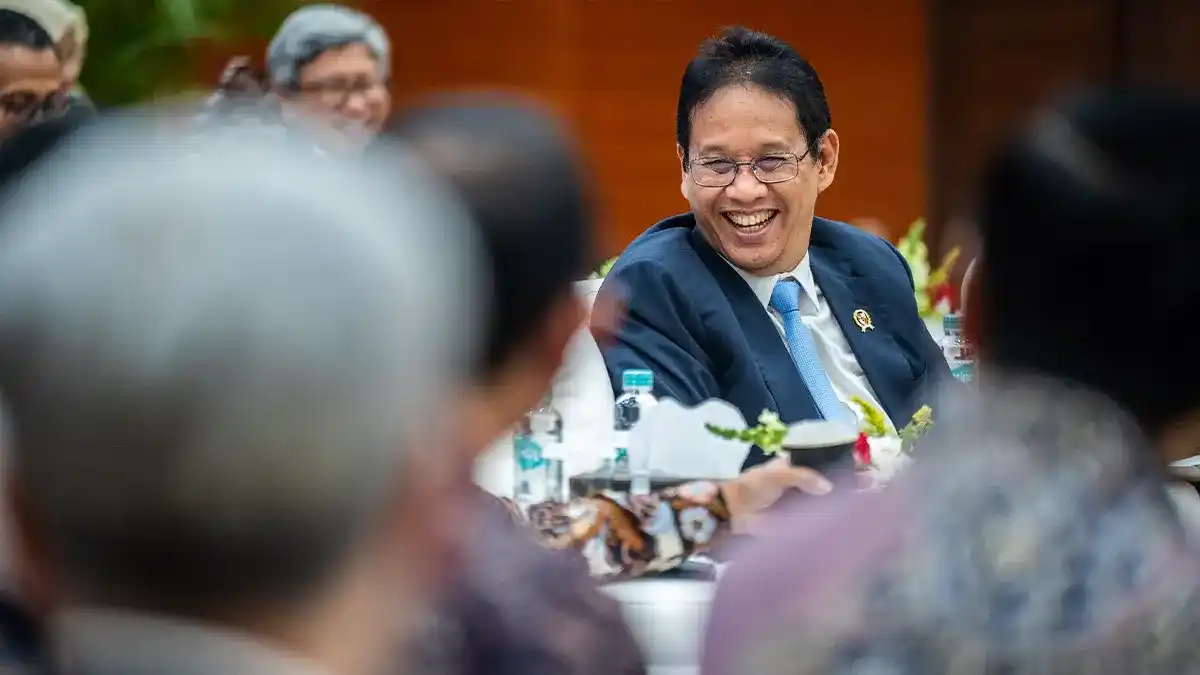


Purbaya: 0% CIT at IIFC Is a Potential Gain, Not Loss

JAKARTA, DDTCNews – Minister of Finance, Purbaya Yudhi Sadewa, has stated that granting a 0% corporate income tax (CIT) incentive for up to 50 years is a strategy to attract major investors to place stated capital in the Indonesia International Financial Centre (IIFC). This topic is one of the reviews covered by national media today, Friday (24/7/2026).
According to Purbaya, the granting of CIT incentives for investors in the IIFC will not result in a potential loss for the state. On the contrary, the incentives are considered likely to generate a potential gain through incoming investment that supports development financing.
"There is no potential loss. Rather, we shall reap potential gain. Not from the tax itself, but from the [investment] funds used to finance construction here," he stated.
Purbaya said the economic benefits generated from incoming investment would be far greater than the potential revenue foregone. Without such incentives, major investors may not necessarily be willing to enter Indonesia's financial centre.
He views that substantial tax incentives are necessary to render Indonesia's financial centre more competitive compared with other financial centres, such as Singapore, Hong Kong and Dubai, United Arab Emirates.
"We need to be slightly more attractive. Why? Because we are the latest entrant [as a financial centre player]. If we are not more attractive, investors will not be interested. So there is one appealing sweetener; that is simply the nature of trade," he said.
He added that funds flowing into the financial centre can be utilised for various needs, one of which is purchasing government securities (SUN), including global bonds issued by the government in international markets.
According to him, the more investors purchase global bonds, the easier it becomes for the government to obtain US dollars. Consequently, the government would be less dependent on demand in the global market, which could help maintain the stability of the rupiah exchange rate.
"When the government issues, for example, global bonds, there are buyers for the dollars, so the government is also not under pressure in the global market for our dollar demand. In turn, this will help stabilise our exchange rate," said Purbaya.
On another note, the government and the House of Representatives (Dewan Perwakilan Rakyat/DPR in Indonesian) have approved the IFFC Draft Law for enactment into law. The IFFC Law will contain 10 chapters and 73 articles setting out in detail the establishment of the IFFC.
After the IIFC Law is officially enacted, the government will issue implementing regulations in the form of a government regulation (Gov. Reg.). This regulation will govern the administration of the IIFC, including the granting of tax incentives for investors and entrepreneurs.
Beyond the topic, there is a review concerning marketplace providers that are prohibited from charging fees to sellers following their appointment as collection agents. There is also a discussion regarding the prohibition on taxpayers recording the submission of explanations concerning letters of inquiry (surat permintaan atas penjelasan atas data dan/atau keterangan/SP2DK in Indonesian) via video conference.
The following is a complete review of tax articles.
State Budget as the Initial Funding Source for IIFC
The establishment of the IIFC will be funded by the government through the state budget (anggaran penerimaan dan belanja negara/APBN in Indonesian), supplemented by private investment and state-owned enterprises (SOEs).
Purbaya has not yet disclosed the amount of state budget funds to be used as initial support for establishing the financial centre. He only confirmed that not all financing will come from the state treasury, as there will be investment injections, including from BPI Danantara.
"As such, not all of the funds will be sourced from the state budget. Investors will be releasing initial funds to build there. It is quite a substantial amount, not from the state budget," he said. (DDTCNews)
Collecting Art. 22 Income Tax, Marketplaces Urged Not to Charge Fees
The Directorate General of Taxes (DGT) has reminded marketplace providers not to impose additional charges on online merchants (sellers) after being appointed as Article 22 Income Tax collection agents. Even if charges are levied, the marketplace must explain them transparently to sellers.
DGT Director of Tax Dissemination, Service and Public Relations, Inge Diana Rismawanti, said sellers are entitled to request an explanation if a marketplace imposes additional charges linked to the implementation of Article 22 Income Tax collection.
"If the marketplace, in fact, imposes charges that appear to increase costs due to the collection of Article 22 Income Tax, this must be questioned," she said. (DDTCNews)
DGT Bans Recording of SP2DK Explanations via Video Conference
Director General of Taxes Circular Letter Number SE-8/PJ2026 prohibits taxpayers from recording the submission of explanations concerning letters of inquiry (surat permintaan penjelasan atas data dan/atau keterangan/SP2DK in Indonesian). TThis prohibition applies where the explanation regarding the SP2DK is submitted by the taxpayer, their representative, attorney or employee in person via video conference.
Any taxpayer, representative, attorney or employee who breaches the aforementioned prohibition on recording shall be subject to penalties pursuant to statutory provisions.
It should be noted that, although taxpayers are prohibited from recording during the in-person submission of explanations via video conference, the tax office (kantor pelayanan pajak/KPP in Indonesian) is, in fact, authorised to record such activities. (DDTCNews)
Digital Sector Tax Revenues Reach IDR8.68 Trillion
The DGT recorded tax revenue from the digital sector in the first half of 2026 amounting to IDR8.68 trillion.
That figure comprises VAT on e-commerce of IDR6.34 trillion, cryptocurrency tax of IDR205 billion, P2P lending or fintech of IDR695.84 billion and tax on procurement transactions of goods and/or services through the government procurement information system (sistem informasi pengadaan pemerintah/SIPP in Indonesian) of IDR1.44 trillion.
"We hope that the continuously improving compliance of digital entrepreneurs can support state revenue whilst at the same time establishing an equitable tax system for all business models, both conventional and digital," said Inge. (DDTCNews, Kontan)
Local Governments Assured on Tax Break for Low-Income Housing
The Ministry of Home Affairs (Kementerian Dalam Negeri/Kemendagri in Indonesian) has requested local governments not to be concerned about the impact of the exemption from building approval (persetujuan bangunan gedung/PBG) user charges and acquisition duty on the right to land and building (bea perolehan hak atas tanah dan bangunan/BPHTB in Indonesian) for housing for low-income communities (masyarakat berpenghasilan rendah/MBR in Indonesian).
According to Minister of Home Affairs, Tito Karnavian, local governments' concerns regarding pressure on local own-source revenue (pendapatan asli daerah/PAD in Indonesian) due to the exemption from building approval user charges and acquisition duty on the right to land and building are unfounded.
"The economic and social benefits generated by housing construction are, in fact, far greater," said Tito. (DDTCNews) (dik)