

Financial Centre to Be Established with Special Tax Regulations

JAKARTA, DDTCNews - The government and the House of Representatives (Dewan Perwakilan Rakyat/DPR in Indonesian) are accelerating discussions on the Indonesian International Financial Centre (IIFC) Draft Law. This topic is among the reviews featured in national media today, Friday (3/7/2026).
The government and the House are targeting completion of the IIFC Bill discussions by 21 July 2026. As such, the Draft Law could be approved at a House plenary session on 22 July 2026, just before parliament enters its recess period.
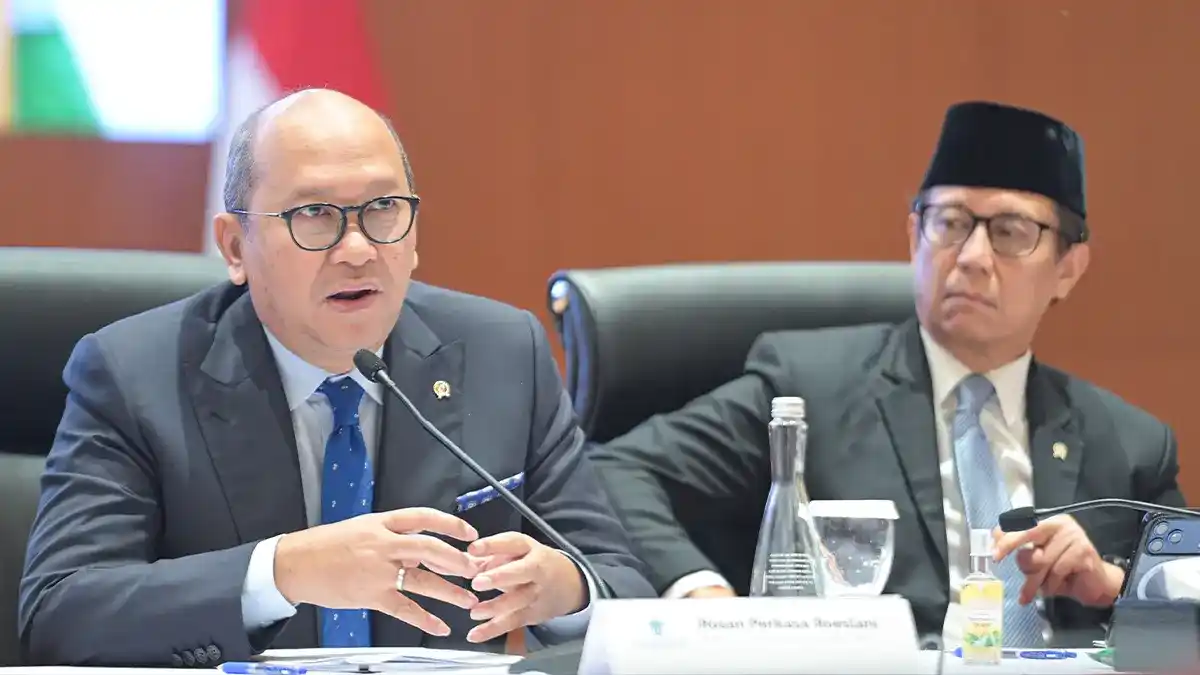
"Hopefully this will become one of the important milestones in the reform of Indonesia's financial system," said Mukhamad Misbakhun, Chairperson of House Commission XI.
The IIFC Draft Law was drafted to support the establishment of a financial centre in Indonesia. The drafting of this Draft Law is a follow-up to Article 248A of Law 4/2026, which mandates the establishment of a Draft Law on the administration of the IIFC within 3 months of Law 4/2026 being enacted.
Misbakhun stated that the IIFC Draft Law will contain various special provisions, including tax provisions.
"We have tax, customs and excise regulations. We are making a comprehensive effort. What has previously existed in general laws, we will provide as specific exceptions in the IIFC Law," he said.
In addition to taxation, the IIFC Draft Law also contains special regulations concerning the financial sector. Supervision of the financial sector within the IIFC will be implemented by the authority within the zone itself, rather than the Financial Services Authority (Otoritas Jasa Keuangan/OJK in Indonesian).
Moreover, the IIFC will also have a special court with jurisdiction to examine, adjudicate and rule on disputes relating to business activities within the IIFC. The IIFC will adopt common law, rather than civil law as has hitherto been applicable in Indonesia.
With these various special features, the IIFC will become its own enclave, akin to financial centres in other countries.
Minister of Finance, Purbaya Yudhi Sadewa, hopes the IIFC Otoritas Jasa Keuangan will be enacted promptly for the financial centre to be established this year. He noted that the establishment of the financial centre is planned as one of the subjects of President Prabowo Subianto's state address in August.
"The law will be completed in July, and in August, the President hopes it can be read out in the presidential address. I think it will be operational by the end of this year," he said.
He added that the financial centre will be equipped with various facilities that are attractive to investors, including tax incentives.
In addition to this topic, there is a review of preparations for the unification of the tax court under the Supreme Court. There is also a discussion on the progress of improvements to the coretax system.
The following is a full review of the tax-related articles.
Financial Centre to Channel Investments into Strategic Projects
Purbaya considers that investment funds managed through the financial centre can be used to finance various strategic projects, including those under Danantara.
He noted that investors will place investment funds in projects that are attractive in terms of returns. In addition, the funds can also be used to purchase government securities.
"This money flows into the financial centre, where it will certainly need to be put to work. The financial centre will subsequently determine where to invest. We hope they can enter attractive domestic projects," he said. (DDTCNews)
Purbaya to Participate in Testing Coretax Reliability
The Directorate General of Taxes (DGT) recently carried out further improvements to the coretax system to ensure tax administration services operate more stably.
Director General of Taxes, Bimo Wijayanto, revealed that Purbaya will participate in testing the newly improved coretax. He noted that the authority has made improvements to the fullest extent possible so that coretax runs smoothly and reliably, particularly ahead of testing next week.
"We are continuously updating and improving coretax. There was a case management issue that had slowed down and caused problems, but we resolved it internally yesterday. So today it is working fine again, and next week the Minister will conduct a test, so we are fully prepared," he said. (DDTCNews)
Welcoming Unification, Supreme Court Trains Administrative Judges on Tax
The Agency for Policy Strategy and Law and Judicial Training and Education (Badan Strategi Kebijakan dan Diklat Hukum dan Peradilan/BSDK in Indonesian) of the Supreme Court (Mahkamah Agung/MA in Indonesian) held training to enhance the understanding of state administrative (tata usaha negara/TUN in Indonesian) judges regarding the procedural law characteristics of the tax court.
The training was held to prepare for the unification of the tax court under the Supreme Court with effect from 31 December 2026, as established in Constitutional Court (Mahkamah Konstitusi/MK in Indonesian) Decision Number 26/PUU-XXI/2023.
"This capacity-strengthening is deemed important, because tax disputes have special characteristics, in terms of procedural law, evidence, the subject matter of disputes and the consequences of rulings on taxpayer rights and state revenues," the Agency for Policy Strategy and Law and Judicial Training and Education stated in its release. (DDTCNews)
Marketplaces Also Collect Tax on Delivery Fees and Goods Insurance
Article 22 Income Tax of 0.5% on trading via marketplace platforms is not levied solely on the gross turnover of merchants. The collection of Article 22 income tax also applies to parties other than merchants, given that the scope of domestic merchants under Minister of Finance Regulation (MoF Reg.) 37/2025 is not limited to merchants alone.
Referring to Article 5 paragraph (2) of MoF Reg. 37/2025, courier or forwarding companies, insurance companies and other parties that transact with buyers of goods/services through a marketplace are also categorised as domestic merchants.
"Included in domestic merchants referred to in paragraph (1) are courier or forwarding companies, insurance companies and other parties that conduct transactions with buyers of goods and/or services through electronic commerce," reads Article 5 paragraph (2) of PMK 37/2025. (DDTCNews)
Ride-Hailing Drivers Grouped as MSMEs, Income
Minister for Micro, Small and Medium Enterprises (MSMEs), Maman Abdurrahman, stated that two-wheeled ride-hailing drivers are officially treated as micro online transport entrepreneurs with effect from 1 July 2026.
Maman said the policy constitutes part of the government's efforts to strengthen the protection and empowerment of micro-enterprise operators. As micro entrepreneurs, ride-hailing drivers are also entitled to receive various facilities prepared by the government, including tax provisions applicable to micro enterprises.
"Ride-hailing drivers are now entitled to all the facilities available to micro entrepreneurs. These include not being subject to tax, as their average income remains below the gross turnover threshold of IDR500 million," he stated. (DDTCNews) (dik)